

Quick answer
Cat acne has several possible causes, and litter box material is only one part of the picture. A dirty, worn, or hard-to-clean litter box can contribute to a less hygienic environment, but bowls, grooming habits, skin sensitivity, stress, and other medical issues may matter just as much.
So if your cat has recurring chin acne, the smartest approach is not to blame one product immediately. It is to reduce obvious hygiene stressors and look at the full routine.
What cat acne actually is
Feline acne usually appears as blackheads, crusting, or inflamed bumps around the chin and lips. In mild cases it comes and goes. In more stubborn cases it can become red, irritated, or infected.
VCA's chin acne in cats overview is helpful because it frames acne as a multi-factor issue rather than a one-cause diagnosis. That mindset matters here too. If you are looking for one perfect explanation, you may miss the combined effect of several smaller issues.
Where litter box material may play a role
A litter box can become relevant in two indirect ways.
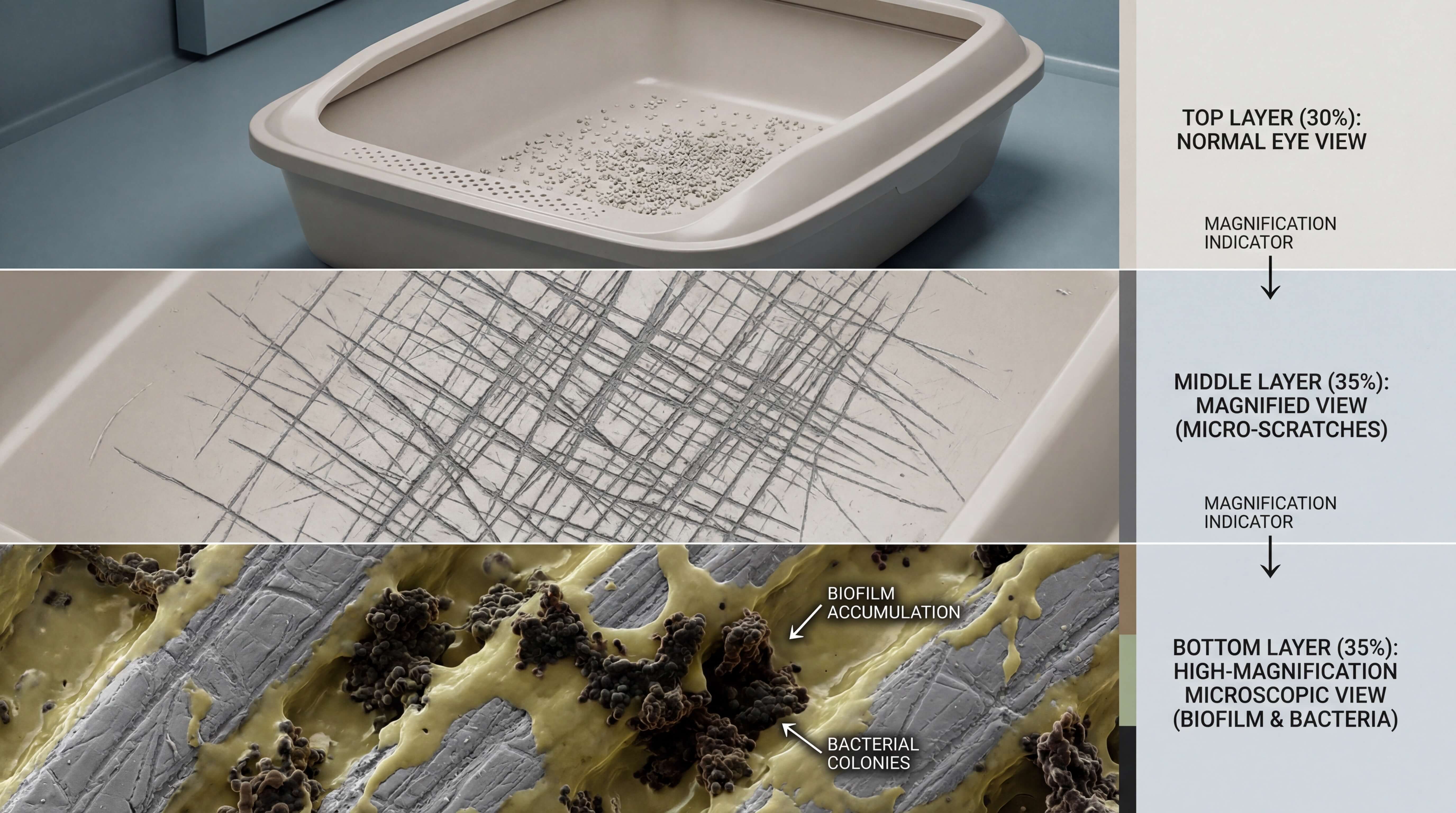
First, if the box is worn and harder to clean, the overall hygiene standard around the cat's elimination area may drop. That can matter more in homes where dust, residue, and odor are already recurring problems.
Second, a rougher or dirtier environment can become one more source of contact contamination in a cat that is already sensitive. This does not mean plastic causes acne by itself. It means hygiene friction matters more when the cat is already prone to skin irritation.
That is why it helps to pair this article with our litter box safety comparison and our bacteria growth article for plastic vs stainless steel litter boxes. Those pages explain how surface wear changes cleanup quality over time.
Other things to check before blaming the box
Cat acne often has more than one trigger. Before you decide the litter box is the whole problem, review the rest of the environment:
food and water bowls, especially if they are worn plastic
grooming quality around the chin
stress or routine disruption
skin sensitivity or secondary infection
how often shared surfaces are cleaned
This is important because some owners switch the litter box and feel disappointed when the acne does not disappear completely. The box may still have been worth improving, but it was never the only factor.
Practical low-risk changes that can help
If your cat has recurring chin acne, these are reasonable, low-risk changes to make:
keep litter boxes cleaner on a more predictable schedule
replace obviously worn plastic items that trap grime
use mild cleaning products and rinse thoroughly
choose surfaces that stay easier to wash well
monitor whether the skin improves after environmental changes
If your current box is old, scratched, or hard to deodorize, moving to a stainless steel cat litter box can be part of a smarter hygiene routine. The goal is not to treat acne with a product. The goal is to remove one avoidable source of friction.
When to see your veterinarian
If your cat's chin is red, swollen, painful, draining, or getting worse, this should not stay an SEO article problem. It becomes a medical issue. The same is true if the acne keeps returning despite cleaner bowls, cleaner litter boxes, and better routine control.
Use articles like this to guide environmental improvements, but use your veterinarian to rule out infection, allergy, or other skin disease.
Final takeaway
Litter box material may play a role in cat acne indirectly through hygiene and surface wear, but it is not the whole story. The most useful response is a calm, multi-factor cleanup plan.
If you want to improve the litter setup first, start with the PalNests stainless steel litter box. If you want the bigger decision framework before changing anything, review our stainless steel vs plastic litter box safety guide and material comparison article.


Leave a comment
This site is protected by hCaptcha and the hCaptcha Privacy Policy and Terms of Service apply.