Introduction: The "Invisible Threat" in Your Cat’s Plastic Box
For decades, the plastic litter box has been a staple in American homes—cheap, lightweight, and readily available. But as we enter 2025, a shift is occurring in the pet care industry. According to the American Pet Products Association (APPA), pet industry spending is projected to exceed $157 billion this year, with a massive surge in spending driven by "wellness-focused" millennials and Gen Z owners. We aren't just buying toys anymore; we are investing in preventative health.
The latest research raises a concerning question for this health-conscious generation: Is your plastic litter box silently harming your cat?
The problem isn't just the smell; it's what you can't see. While plastic boxes are convenient, they are prone to developing "micro-abrasions"—tiny scratches from scooping and digging that become safe havens for bacteria. This article dives deep into the veterinary science behind the stainless steel cat litter box revolution, exploring why high-sided metal boxes are becoming the top recommendation for hygiene, safety, and odor control in 2025.
The Science of Surface Hygiene: Why Vets Are Concerned About Plastic
To understand the risk, we have to look at the materials under a microscope.
Understanding Biofilms and Bacterial Retention
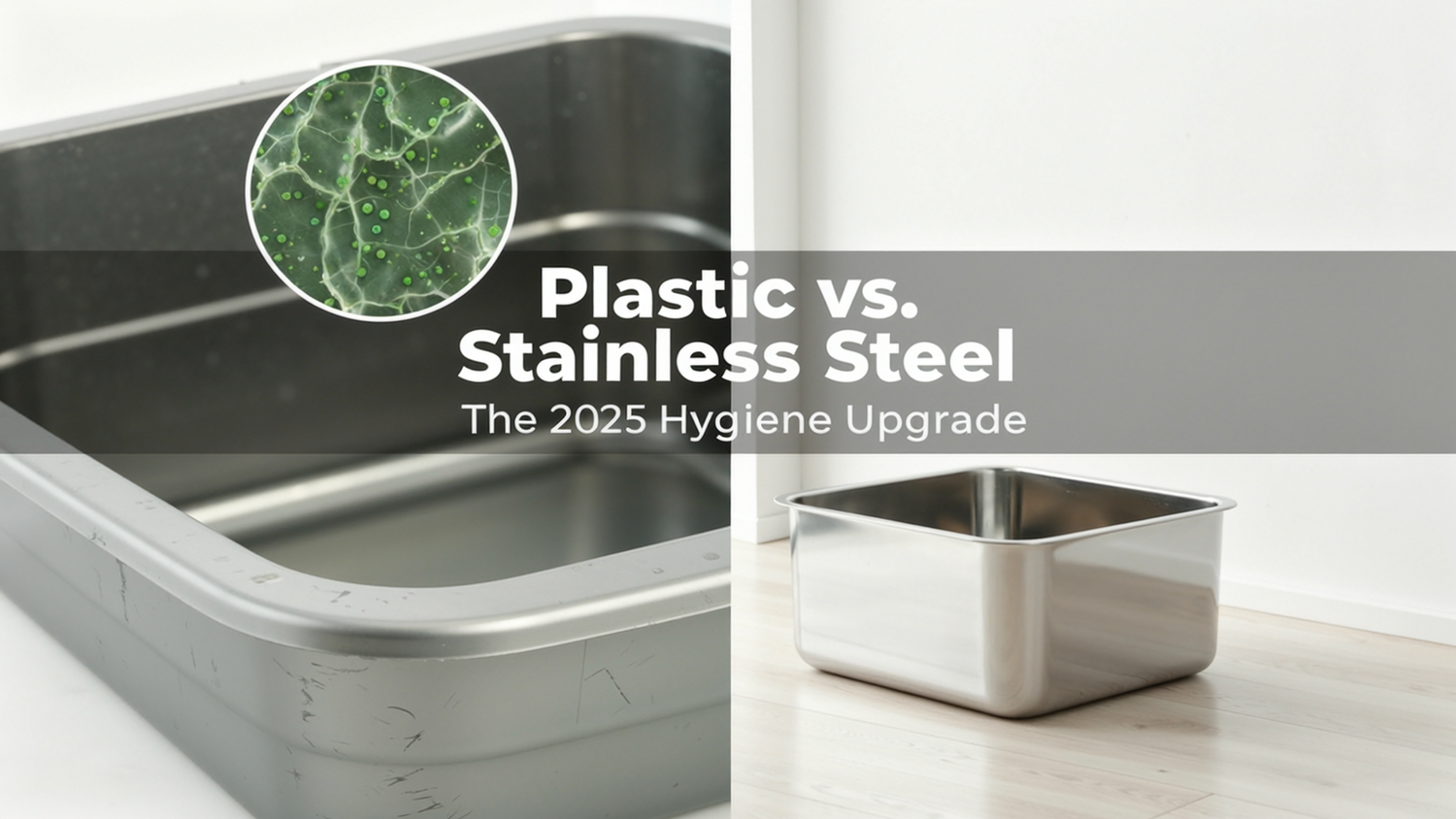
Plastic is notoriously difficult to sterilize. Veterinary studies indicate that plastic surfaces, particularly those that are hydrophobic (water-repelling), are prone to the formation of biofilms. A biofilm is a fortress of bacteria (like E. coli, Salmonella, and Staphylococcus) that adhere to a surface and secrete a protective slime. Once a biofilm forms in a plastic litter box, standard soap and water often cannot penetrate it.
In contrast, stainless steel is hydrophilic and non-porous. It does not allow bacteria to anchor themselves effectively. A 2024 comparative study on surface hygiene in veterinary clinics found that stainless steel retained 98% less bacteria than plastic after a standard cleaning cycle.
The "Micro-Abrasion" Factor
Every time you scrape the bottom of a plastic box with a scoop, you create microscopic grooves. These scratches are too small to see with the naked eye, but are the size of the Grand Canyon to a bacterium. Waste particles get trapped in these valleys, protected from your cleaning sponge. Over weeks and months, this creates a permanent "bacterial reservoir" that contributes to the lingering "litter box smell" that no amount of baking soda can hide.
Feline Health Risks Linked to Plastic Litter Boxes
The issue with plastic isn't just gross; it's a potential health hazard.
Feline Chin Acne and Contact Dermatitis
Have you ever noticed black specks or red bumps on your cat's chin? This is often Feline Chin Acne, a condition frequently linked to plastic food bowls and litter boxes. When your cat sniffs or rubs their face against the dirty rim of a scratched plastic box, bacteria can transfer to their pores, causing infection.
Vet Fact: Many dermatologists recommend switching to stainless steel or ceramic to eliminate this "contact dermatitis" trigger. By removing the porous surface where bacteria thrive, you break the cycle of reinfection.
Urinary Tract Health and Ammonia Buildup
Cats have a sense of smell 14 times stronger than humans. Porous plastic absorbs ammonia from urine over time. Even if the box looks clean to you, it may smell like a dirty restroom to your cat. This "olfactory stress" can lead to:
● Litter Box Aversion: The cat starts peeing elsewhere (like your bed) to avoid the smell.
● Holding Urine: This increases the risk of urinary crystals and UTIs, a leading cause of vet visits in 2025.
Stainless Steel Cat Litter Box Benefits: The 2025 Gold Standard
The "Non-Porous" Advantage
The primary selling point of a stainless steel cat litter box is its 304-grade construction. This medical-grade material is completely non-porous. Urine and waste sit on top of the surface rather than soaking into it.
● Zero Odor Absorption: You can use a steel box for 5 years, wash it, and it will smell exactly like it did on day one.
● Effortless Scooping: Wet clumps slide off the metal without sticking, earning it the nickname "the Teflon of litter boxes."
Sustainability and Environmental Impact
In 2025, sustainability is non-negotiable.
The Plastic Loop: A typical plastic box needs replacing every 6-12 months to maintain hygiene. That’s 15-20 large chunks of non-biodegradable plastic in the landfill over a cat's life.
The Steel Solution: Stainless steel is 100% recyclable and virtually indestructible. One box lasts a lifetime, aligning perfectly with the eco-conscious values of modern pet owners.
Why High Sides Matter: The "High Sided Stainless Steel
If you search for a high sided cat litter box stainless steel, you'll see it's the specific design trending this year. Why?
Containing the Mess: Urine Spray and Scatter
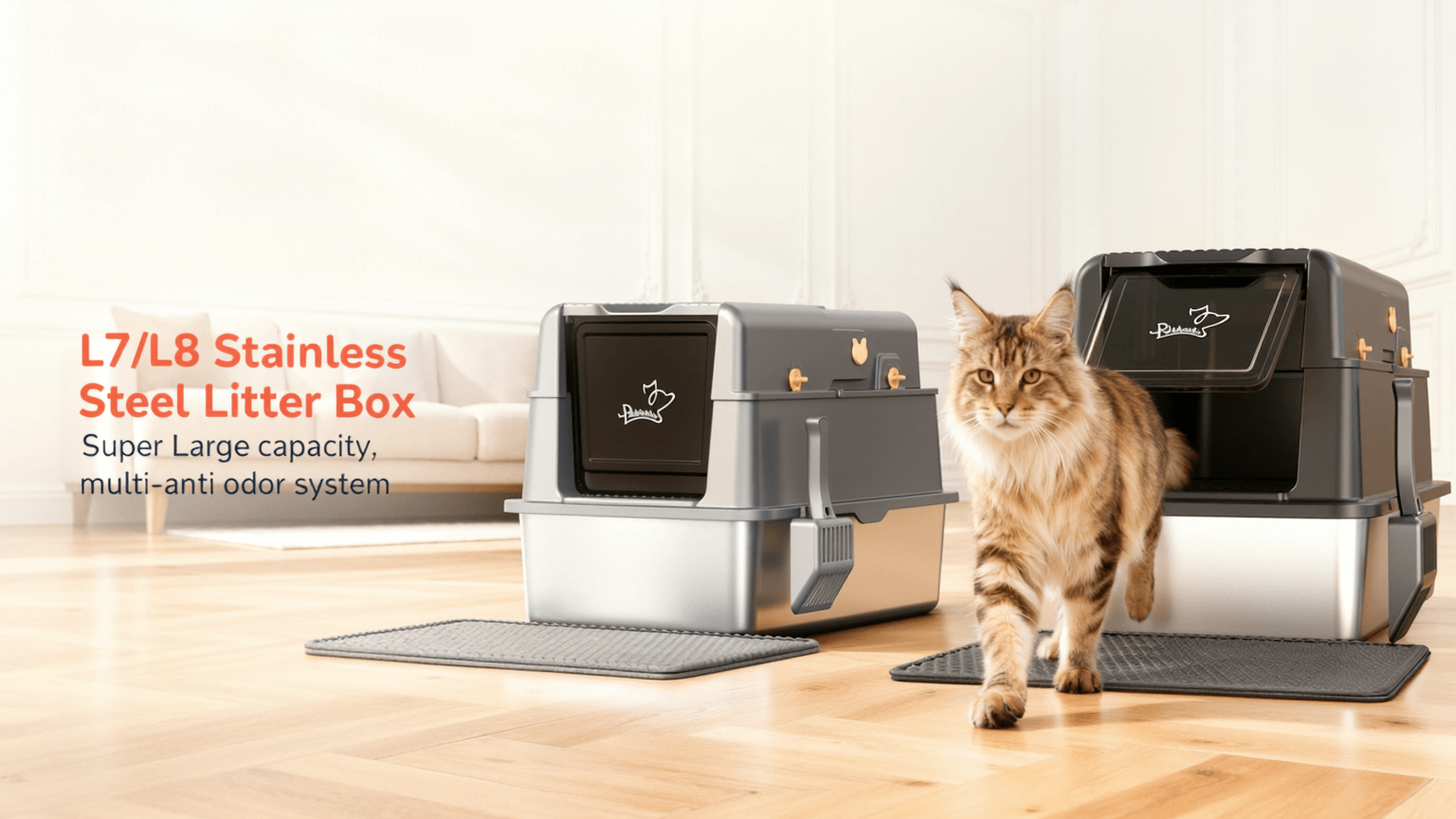
Standard metal pans (like baking sheets) are too shallow. The new 2025 standard involves walls that are 6 to 12 inches high.
● For "Elevator Butt" Cats: Many cats raise their rear ends while urinating. High sides capture this spray, preventing it from hitting your wall or floor.
● For Aggressive Diggers: It keeps the litter inside the box, not all over your carpet.
Privacy and Anxiety Reduction
Open pans can make cats feel vulnerable, but enclosed hoods traps odors (and dust) inside with the cat. High sided stainless steel cat litter boxes offer the perfect middle ground:
● Safety: The cat can see out (unlike a hooded box) to spot potential threats (or other pets).
● Shielding: The high walls provide a sense of security and privacy without the claustrophobia of a lid.
2025 Buyer’s Guide: Features to Look For
Not all metal boxes are created equal.
● Grade 304 vs. 201: Always check for 304-grade stainless steel. It contains nickel and chromium, making it rust-proof and resistant to the acidity of cat urine. Cheaper 201 grades will rust over time.
● Rounded Edges: Ensure the rim is rolled or rounded. Sharp metal edges can be dangerous for both you (during cleaning) and your cat.
● Rubber Feet: Metal slides easily on hard floors. Look for models with integrated non-slip rubber bases or matching silicone mats.
Cost Analysis: Is the Upfront Price Worth It?
The sticker shock is real. A quality stainless steel cat litter box with high sides can cost $50-$90, compared to $15 for plastic. But let's look at the math over 5 years.
| Feature | Plastic Litter Box | Stainless Steel Litter Box |
| Initial Cost | $15 | $90+ |
| Replacement Freq. | Every 6-8 Months | Never (Lifetime) |
| 5-Year Cost | $150 - $200 | $90+ |
| Odor Control | Declines rapidly | Permanent |
| Health Risk | High (Bacteria trap) | Low (Medical grade) |
Overcoming Common Stainless Steel "Cons"
The "Coldness" Factor
Unique Insight: One complaint is that metal feels cold on sensitive paws, which can startle older, arthritic cats.
● Solution: In winter, place a thin layer of natural litter (like pine or paper), which insulates better than clay. You can also place a heating pad under the metal box (on low) to warm the litter slightly—something you can't safely do with cheap plastic!
Noise Control
● Solution: Fill the litter deeper (3-4 inches). This prevents the cat's claws from hitting the bottom metal, eliminating the noise and making the digging experience more natural.
Quick Takeaways
● Hygiene Hero: Stainless steel resists biofilm formation and bacterial growth, reducing the risk of feline chin acne and UTIs.
● Odor Elimination: Non-porous metal does not absorb ammonia; plastic acts as a sponge for smells over time.
● High Sides are Essential: Look for high sided stainless steel cat litter boxes (8"+) to contain urine spray and litter scatter.
● Eco-Friendly: One steel box replaces 10+ plastic boxes, reducing landfill waste.
● Cost-Effective: Despite higher upfront costs, steel is cheaper over the lifespan of a cat.
● Safety First: Ensure you buy 304-grade stainless steel to prevent rust from acidic urine.
Conclusion
As we navigate 2025, the "throwaway culture" of pet care is fading. We are choosing products that last, protect our planet, and, most importantly, safeguard our pets' health. The stainless steel cat litter box is more than a trend; it is a return to hygiene fundamentals.
By eliminating the microscopic bacterial traps found in plastic, you aren't just buying a fancy box—you are actively preventing skin issues, reducing stress, and creating a cleaner home environment.
Next Step: Check your current plastic litter box. If you see white scratch marks on the bottom, it’s harboring bacteria. It’s time to upgrade.
Frequently Asked Questions (FAQs)
1. Do stainless steel litter boxes really smell less? Yes. Unlike plastic, which is porous and absorbs ammonia urine odors into the material itself, stainless steel is non-porous. Once you scoop and wipe it, the smell is completely gone because the odor particles cannot penetrate the metal.
2. Is a stainless steel cat litter box cold for cats? Metal adapts to room temperature. While it can feel cooler to the touch than plastic, most cats do not mind. For older cats with arthritis, ensure you use a deep layer of litter (3-4 inches) so their paws mostly touch the litter, not the metal bottom.
3. What is the best way to clean a stainless steel litter box? You don't need harsh chemicals. Because the surface doesn't trap bacteria, a simple wash with hot water and mild, unscented dish soap is highly effective. It is also safe to use enzymatic cleaners if desired.
4. Will high sided stainless steel litter boxes rust? Not if you choose the right grade. Look for 304-grade stainless steel, which contains chromium and nickel to prevent corrosion. Lower quality steels (like 201) may rust when exposed to the acidity of cat urine over long periods.
5. Are metal litter boxes loud? They can be if the litter is too shallow. To dampen the sound of claws scratching the metal, keep the litter level at a minimum of 3 inches. This acts as a sound buffer and is generally more comfortable for your cat to dig in.
Share Your Experience
Have you made the switch to a stainless steel cat litter box with high sides? Did you notice a difference in odor control or your cat's chin acne? We’d love to hear your story! Drop a comment below or share this article with a fellow cat parent who is tired of scrubbing plastic boxes!

![Plastic vs. Stainless Steel Litter Boxes: Which is Safer for Cats in 2025? [Vet-Approved Facts]](http://palnests.com/cdn/shop/articles/PlasticVSSteelComparison.png?v=1763707410&width=1500)


Leave a comment
This site is protected by hCaptcha and the hCaptcha Privacy Policy and Terms of Service apply.