
Quick answer
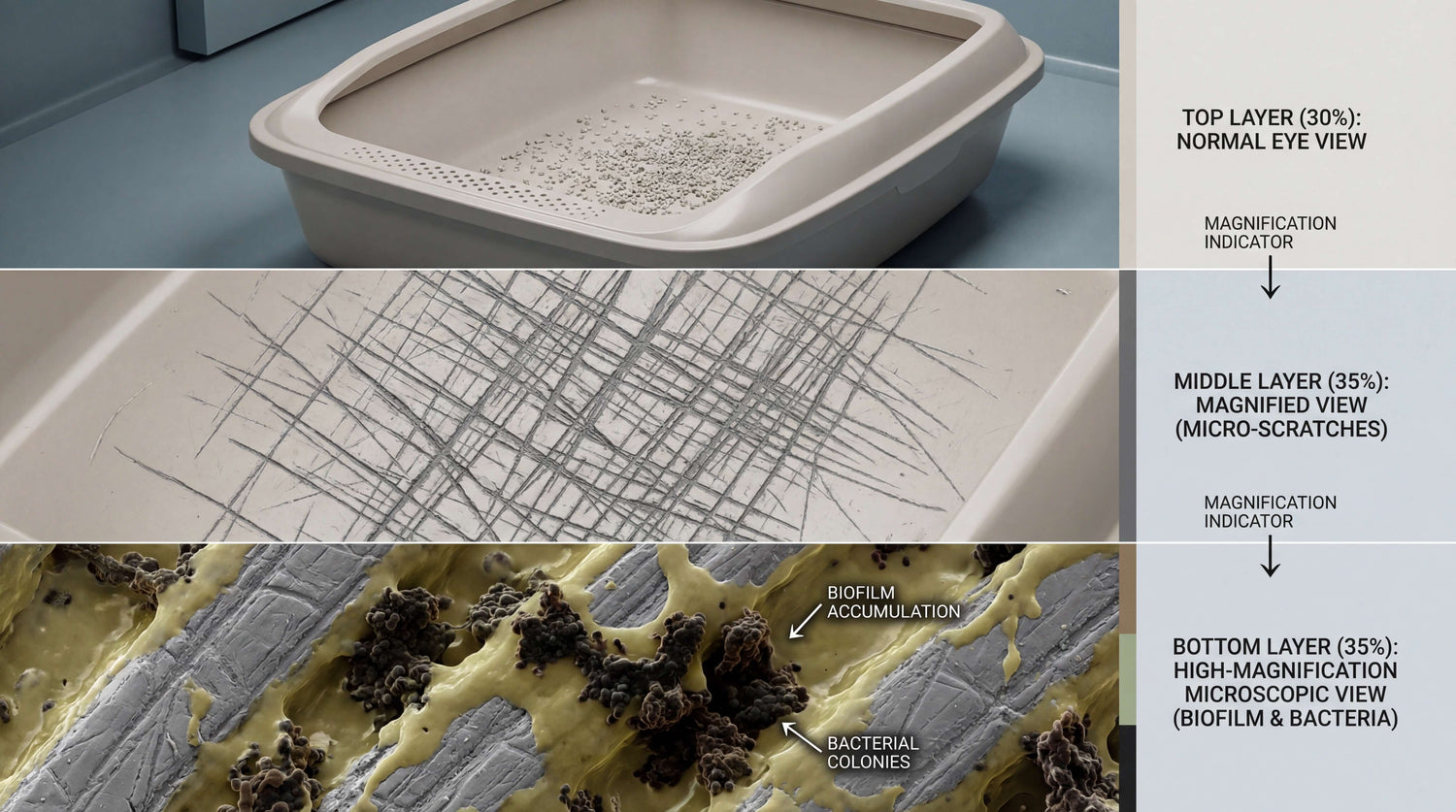
Bacteria can grow in any dirty litter box, whether it is plastic or stainless steel. The key difference is that worn plastic often becomes harder to clean thoroughly because scratches and rough spots can trap residue and hold odor more stubbornly over time.
So the right takeaway is not "steel has no bacteria." The right takeaway is that smoother, less damaged surfaces are easier to return to a clean state. That matters for hygiene, odor control, and daily maintenance.
Bacteria need more than a material label
Bacteria grow when they have moisture, organic matter, and enough time. A neglected stainless steel box can absolutely become dirty. A well-maintained plastic box can still be acceptable.
Material starts to matter when wear changes how easily waste residue comes off the surface. Once cleaning becomes less complete, the box can feel dirty sooner even when you are doing the same routine.
Why scratches change the cleaning equation
Plastic tends to pick up visible and invisible wear from daily scooping, litter abrasion, and repeated washing. Those surface changes matter because rougher surfaces give residue more places to cling.
If you want the science lens, this PubMed review on biofilm and surface materials and this review on bacterial adhesion and surface roughness both support the broader concept that surface condition influences how microbes attach and persist.
You do not need a lab to notice the practical result. A scratched box is often the box that smells "clean enough" right after washing but seems stale again quickly.
Stainless steel is not magic, but it is easier to manage
Stainless steel does not sanitize itself. It still needs regular scooping, periodic washing, and proper drying. The advantage is simpler: the surface usually stays smoother for longer, which can make cleanup more complete and less frustrating.
That is why many owners experience steel as cleaner even when their routine does not change very much. It is not because their effort disappeared. It is because the effort goes farther.
If you are deciding between the two materials overall, go back to the broader stainless steel vs plastic litter box comparison. This article is meant to explain one slice of the issue, not the entire purchase decision.
Odor is often the first clue
One of the earliest signs that surface wear is becoming a problem is that odor lingers after the litter has been changed and the box has been cleaned. People often blame the litter first. Sometimes that is fair. But sometimes the box itself has become harder to refresh.
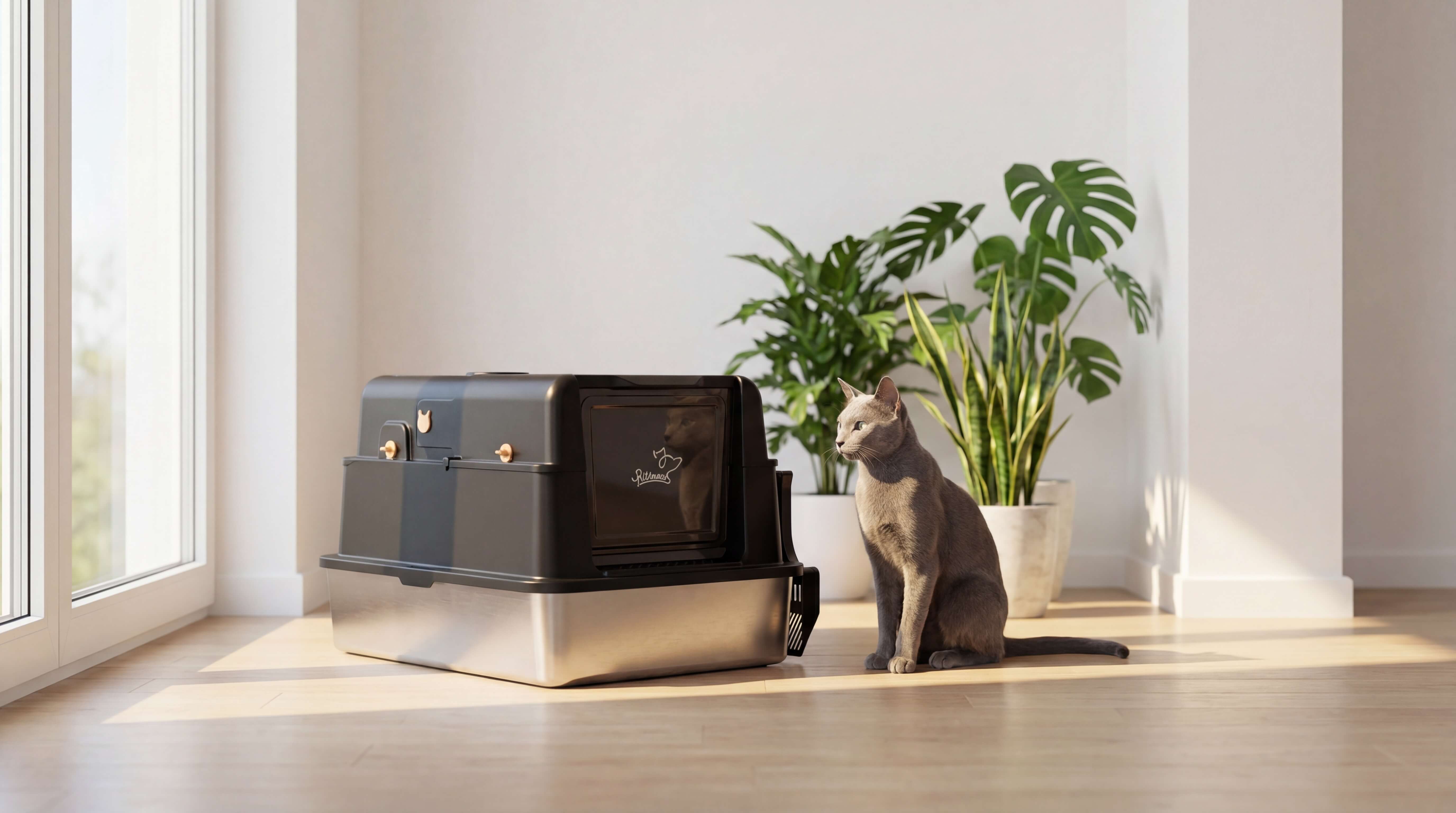
That is where a larger high-sided stainless steel litter box can help in two ways: a smoother surface and a design that handles daily waste more cleanly in the first place.
A better hygiene routine, no matter the material
Even the best material needs a good routine.
Use regular scooping, full litter changes on a predictable schedule, mild soap and warm water for washing, and complete drying before refilling. Cat Friendly Homes' litter box guidance is a good outside reminder that box management is about the whole setup, not just one product feature.
If you are seeing sudden avoidance, do not assume it is only about bacteria or material. The ASPCA litter box problems guide is worth reviewing too, because stress, discomfort, and medical issues can change litter habits quickly.
When changing material is worth it
Switching to stainless steel is worth considering when:
your current plastic box is visibly scratched or stained
odor seems to come back too quickly even after cleaning
you are already dealing with large-cat mess or high spray
you want a box that stays easier to maintain over time
If your main question is health or skin sensitivity, read the related litter box safety article next.
Final takeaway
Bacteria are not a "plastic only" problem, but surface wear can absolutely change how clean a litter box stays in real use. Stainless steel usually wins because it remains easier to wash, easier to deodorize, and easier to keep feeling fresh over time.
If you want the practical next step, compare current options on our cat litter box collection page or go directly to the PalNests stainless steel litter box.


Leave a comment
This site is protected by hCaptcha and the hCaptcha Privacy Policy and Terms of Service apply.