
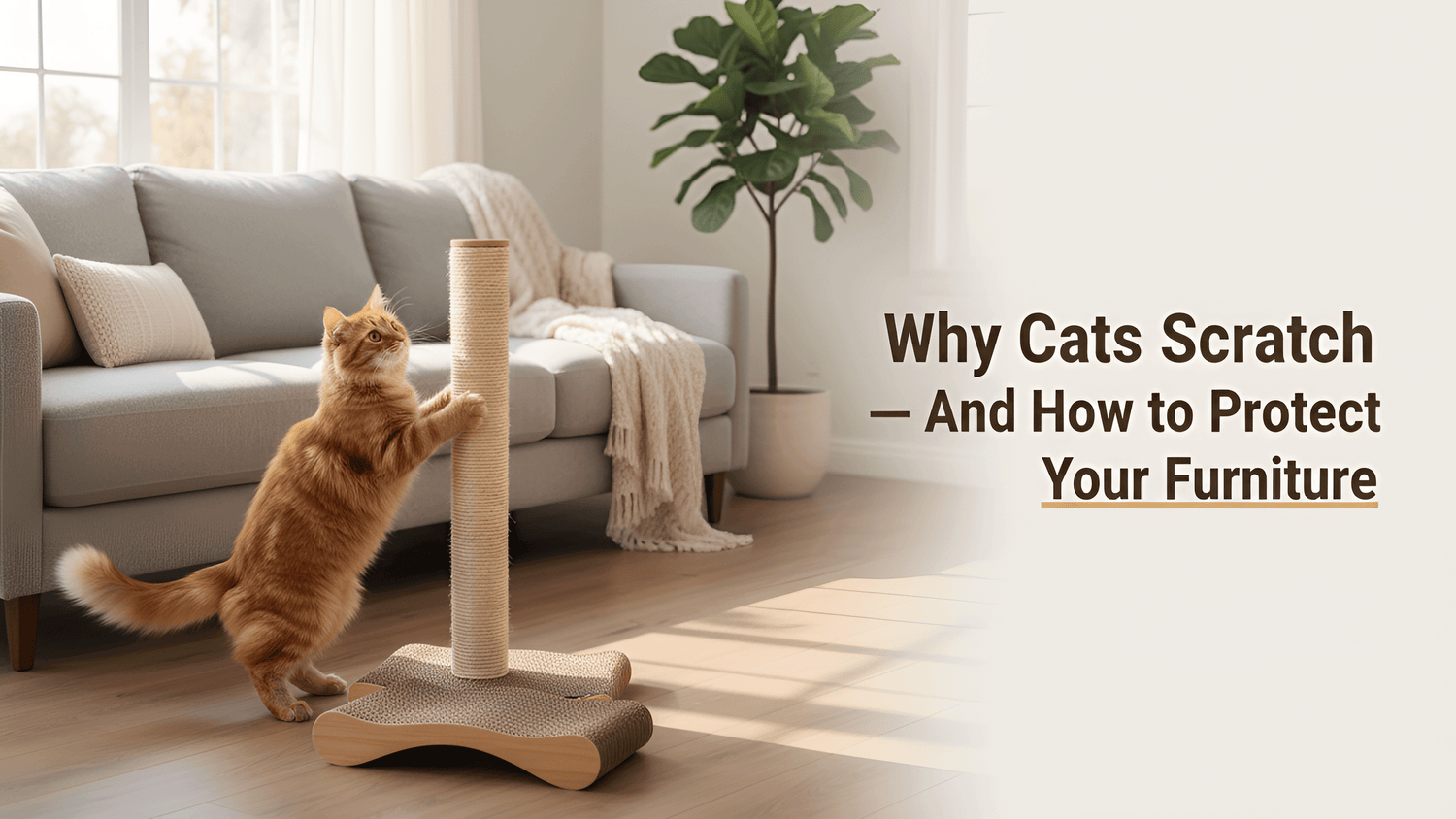
If you’ve ever come home to see your brand-new sofa shredded, your heart can drop. You might even wonder: Is my cat out to ruin my furniture on purpose? The truth, baby, is that your cat isn’t being destructive — it’s just doing what cats naturally do. Scratching is instinctual, serving crucial purposes like nail maintenance, territory marking, stretching, and stress relief.
For new cat owners — or anyone who’s losing their mind because the sofa looks like a claw-attack zone — the real solution isn’t punishment. It’s understanding why cats scratch, and giving them a better, furniture-safe place to do it. In this article, you’ll learn: what drives scratching behavior; why furniture often becomes the target; how to select a cat scratcher that your feline will actually use (and you won’t have to cringe at); plus training, placement, and bonus tips to protect your stuff while respecting your cat’s nature.
Why Cats Are Hardwired to Scratch
Claw Maintenance — Keeping Claws Sharp and Healthy
Cats’ claws are not like our nails. Their claws grow in layers of keratin. Over time the outer layer becomes worn and dull, and scratching lets them shed the old sheath and expose a new, sharper claw underneath.
For house cats, even if they’re not hunting prey, sharp claws remain useful — for climbing, jumping, or steadying balance. When you catch your cat digging into the sofa or a wooden doorframe, what you’re seeing may just be a “nail file session.” If no proper scratcher is provided, your beautiful couch becomes the proxy.
Stretching & Full-Body Exercise
Scratching isn’t just about claws — it’s a full-body workout. The motion of extending, reaching, scratching helps cats stretch muscles in their back, legs, and shoulders. Many cats scratch especially after waking up or before a spurt of activity, like a feline stretch & stretch.
For indoor cats who don’t roam or run outdoors, this stretching and clawing is a key way to stay limber, relieve tension, and keep joints and muscles healthy.
For indoor cats who don’t roam or run outdoors, this stretching and clawing is a key way to stay limber, relieve tension, and keep joints and muscles healthy.
Territory Marking — Scent + Visual Signals
Cats have scent glands on their paw pads. When they scratch an object, they deposit pheromones — chemical signals other cats can detect. At the same time, the torn material or scratches leave a visible mark.
In the wild, cats scratch tree trunks or fences for marking territory. Indoors, they often target objects that are tall or prominent: sofa arms, carpeted posts, curtains, or door frames. Furniture becomes their “territory billboard.”
Stress Relief, Boredom, Anxiety, or Simple Fun
Scratching can be a cathartic, soothing behavior for cats. It helps them cope with stress, expend energy, or just entertain themselves. Especially in indoor-only cats, scratching may substitute for hunting, climbing, or roaming — important instincts that need outlets.
If a cat feels anxious — maybe due to changes in the home, new pets, lack of enrichment — scratching frequency can go up. It’s their way of grounding themselves, marking security, and using up nervous energy.
Why Furniture Often Becomes the Target
“It Feels Like a Tree” — Height, Texture, Stability“
In nature, cats scratch vertical surfaces — tree trunks, fence posts, etc. Indoor furniture often approximates that: the arms of a couch, wooden legs, carpeted posts. These vertical or semi-vertical surfaces give cats the feel of “tree bark,” letting them scratch and stretch as they instinctively would.
The texture and give of fabric or exposed wood also give satisfying tactile feedback — from their claws to their paws to their muscles. That “sweet spot” of grip, stretch, and balance makes furniture naturally attractive.
Convenient Real Estate — Easy Access & Familiar Spots
Cats tend to scratch where they spend time, rest, jump up, or wander. Sofas, chairs, door frames — these are everyday fixtures of human life. And cats are social creatures. They like to mark familiar, frequently used objects, where both chemical scent and visual signs stay fresh and relevant.
If a couch sits near a sunny window, or in the middle of household traffic, or near where you usually lounge — that becomes prime real estate for a scratch session.
The Problem: When “Normal” Behavior Becomes Destructive
Scratching itself isn’t “bad.” But when cats default to your furniture as their scratching post, you end up with shredded upholstery, torn wood, ripped fabric — and a stressed-out human.
● Furniture damage & financial cost: Reupholstering or replacing a sofa is expensive.
● Stress and frustration for humans, guilt or anger for cat owners.
● Risk to cat–owner relationship: If owners respond with punishment or hostility, cats may become fearful, anxious, or even aggressive.
Importantly, many experts (and vets)warn: don’t punish, don’t declaw. Removing the claws (declawing) is cruel, painful, and can lead to behavioral problems and long-term pain.
Trying to stop scratching without offering a valid alternative — a proper scratcher — typically fails and causes more harm than good.
How to Choose a Cat Scratcher (That Actually Works AND Protects Your Furniture)
If you want to keep your sofa intact while letting your cat stay true to cat-ness, the scratcher is your best friend. Here’s how to choose one that works.
Material Matters — What Feels “Right” to Your Cat
Not all scratchers are equal. Different materials give different textures and feedback. Common materials include:
● Sisal rope or cloth — rough, fibrous, akin to tree bark — great for cats who like vertical scratching, claw retraction, and deep grip.
● Wood (unfinished or rough) — heavier and more durable, may appeal to cats who like firm surfaces.
● Cardboard / corrugated paper — ideal for cats who prefer horizontal scratching, and for those who like to “sink in” claws and dig.
● Carpet-covered or fabric scratchers — some cats like soft surfaces similar to sofas, but these may attract cats more to furniture if textures are too similar. Often better used away from key furniture areas.
Because each cat is different, many experts advise providing multiple scratchers with different materials — especially in multi-cat homes.
Shape & Structure — Vertical, Horizontal, or Cat Tree
Scratching style varies by cat. Some like to stretch vertically and scratch down; some prefer lying down and clawing horizontally. Good scratchers come in several forms:
● Vertical scratching post / pole — mimics tree trunk; great for full-body stretching and claw sharpening.
● Horizontal scratch pad / mat / cardboard scratcher — good for cats that like floor-level scratching or carpet-like surfaces.
● Angled or slanted posts / ramps — a hybrid offering edges and angles, sometimes preferred by cats that don’t strictly choose horizontal or vertical.
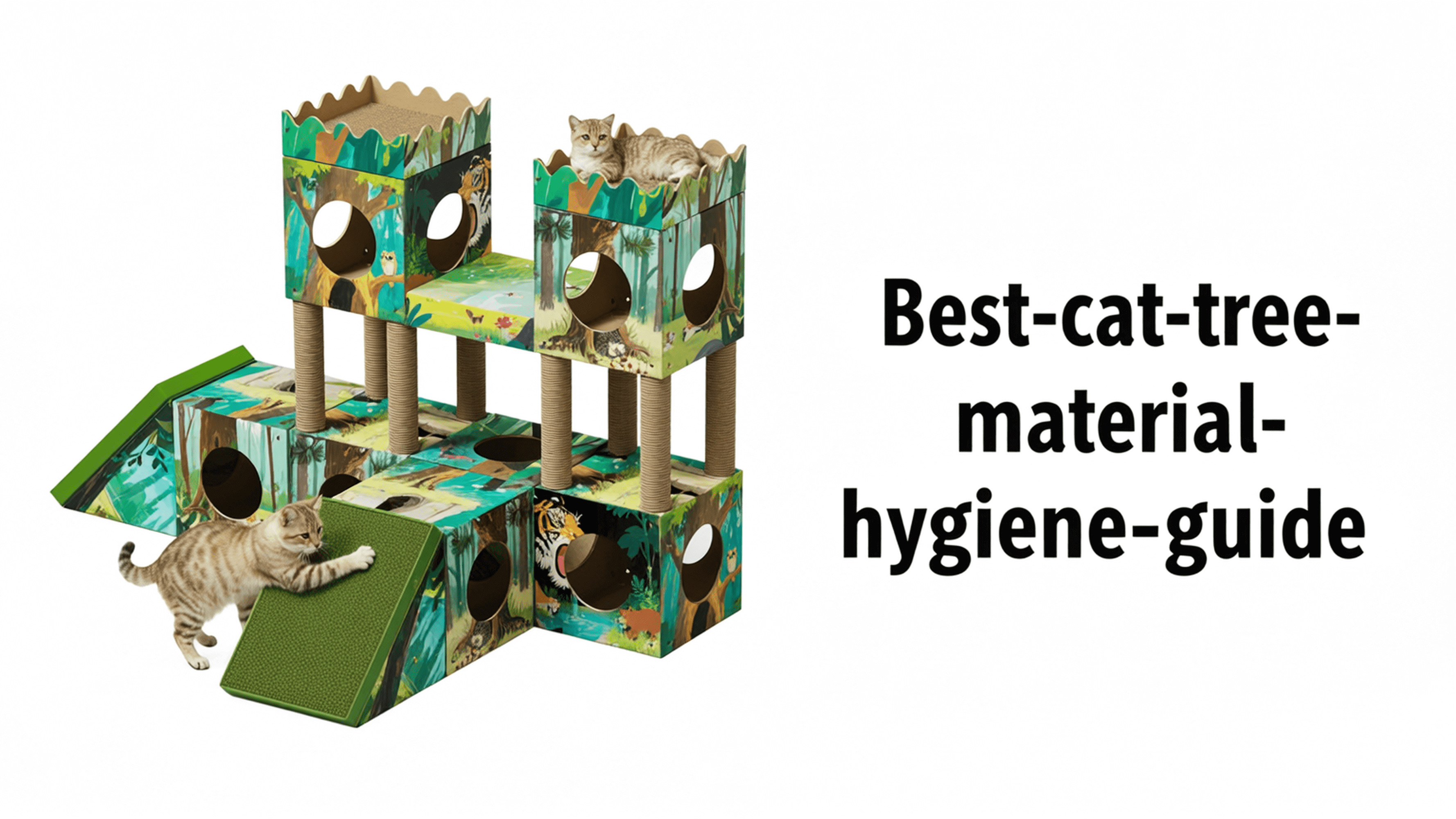
● Cat trees / condos with multiple levels — ideal for indoor cats: they allow scratching, climbing, perching, and resting, all in one structure. Many cats find these more attractive than furniture when properly set up.
Size, Height & Stability — Don’t Go Cheap on This
A flimsy, short, wobbly scratcher is often ignored. For a scratcher to work:
● It should be tall enough that your cat can stretch its body fully — ideally from paws on the ground to paws scratching.
● The base should be wide and heavy enough to prevent tipping when the cat digs in.
● Materials should be sturdy so the structure holds up over time.
If your cat cannot stretch fully or the post shakes when used, they’ll likely revert to furniture. Many cat-behavior experts consider height + stability among the most important factors for a scratcher’s success.
Placement — Where You Put the Scratcher Matters
Even the best scratcher can fail if placed randomly. Think about where your cat normally scratches or lounges — those are prime locations for scratchers.
● Place a vertical post near the sofa or chairs your cat likes to shred.
● If the cat scratches right after waking up, place a scratcher near their bed or sleeping spot.
● In multi-cat homes, spread out several scratchers — don’t limit to just one.
● Don’t tuck scratchers in a closet or corner — make them visible, accessible, and in high-traffic areas.
Variety — Give Them Options
Cats aren’t machines; they have moods and preferences. A good setup often includes:
● A vertical sisal post.
● A horizontal cardboard scratch pad.
● A cat tree or climbing structure with perches.
● Occasional rotation — some cats get bored of the same scratcher day after day.
Providing a variety increases the likelihood the cat finds something appealing — and stays off your furniture.

How to Redirect Your Cat (Training & Behavior Tips)
Use Positive Reinforcement — Reward the Right Behavior
Cats respond best to encouragement, not punishment. Every time your cat uses the scratcher (instead of your sofa), reward them with praise, treats, or affection. Some owners even “demonstrate” scratching by running their fingernails over the scratcher to create sound and movement, drawing cat’s curiosity.
Sprinkling a little catnip on the scratcher often helps cat notice it, especially at first.
Gentle Redirection — Don’t Punish or Force
Avoid spraying water, yelling, or physical reprimand. These negative responses don’t teach cats where to scratch — they only teach them to avoid you or scratch when you’re not around. In worst cases, punishment leads to fear, anxiety, or even aggression.
Don’t force your cat to use a scratcher by holding its paws and dragging them across the material — this can feel threatening or stressful.
Distract with Enrichment — Toys, Play, Climbing
Often scratching is driven by boredom or pent-up energy. Providing mental and physical enrichment — interactive toys, play sessions, perches, vertical climbing — helps reduce unwanted scratching.
Scheduling regular playtime and giving your cat climbing structures or window perches can redirect energy into healthier, non-destructive activities.
Clean & Deodorize Furniture After a Scratch Incident
If your cat has already scratched furniture, clean it thoroughly using an enzyme-based or pet-safe cleaner — removing lingering scent markers reduces the temptation to “top up” the mark. Some cats re-scratch spots with old scent.
Combining cleaning + deterrent methods (see below) + providing scratch alternatives improves your chances of success.
Bonus: What Not to Do — Common Mistakes
● Declawing — A drastic, painful option that removes the cat’s ability to perform natural behaviors. Many veterinary professionals strongly discourage it.
● Punishing / Yelling / Spraying Water — These don’t teach cats what to do; only what not to do — often leading to fear or hiding, scratching behavior.
● Forcing Use of Scratcher — Physically forcing a cat to “use” a scratcher is counterproductive and can damage your relationship.
● Providing Only One Scratcher or Poor Quality Scratchers — One small wobbling post placed in a closet likely won’t do much. Cats need accessible, comfortable, appealing options.
Cat Scratcher Benefits for You and Your Cat (Why a Good Scratcher Is Worth
● Protects your furniture — gives cats an outlet for scratching so sofas, chairs, carpets remain intact.
● Cat health & happiness — supports natural behaviors: claw care, stretching, marking, mental stimulation.
● Less stress & better behavior — cats with proper scratching outlets often scratch less destructively.
● Stronger bond — using positive reinforcement builds trust and respect between you and your cat, instead of fear.
● Long-term savings — investing in sturdy scratchers now saves you money on reupholstery or furniture replacement later.
Matching Scratcher to Your Cat — Not All Cats Are the Same
Vertical vs Horizontal Scratchers — Know Your Cat’s Style
Some cats instinctively stretch up and scratch — vertical posts suit them best. Others prefer horizontal “digging” on carpets or cardboard. A simple test: if your cat usually scratches the carpet or lies down while clawing, horizontal mats might work better. For cats that grab sofa arms or curtains, vertical posts likely feel more natural.
Material Preferences — Try Different Textures
Some cats love sisal rope; some prefer cardboard; others might even dig carpet or old hardwood. Offering variety means letting the cat “choose what feels good” — you just provide options. Over time, you’ll notice which material attracts them most.
Age, Energy Level & Activity — Tailor Scratcher to Your Cat’s Lifestyle
A kitten or young adult cat likely has lots of energy — a tall cat tree with vertical posts, perches, toys, and climbing spots will engage them. An older or calmer cat might prefer a comfy horizontal scratch pad near their favorite resting spot.
Multi-Cat Households — Provide Multiple Scratchers
If you have more than one cat, don’t skimp on scratchers. Provide one per cat (or more), and in different locations — cats dislike “sharing” their territory and marking spots. Multi-scratcher setups reduce conflict and furniture competition.
A Practical Setup — Example of a Furniture-Safe Home Floor Plan for Cats
Imagine your living room: your couch is by the window, a chair near the wall, and a carpet on the floor. Here’s how you could set up scratch-friendly alternatives:
● Place a vertical sisal scratching post next to the sofa’s arm — replace the prime “scratching real estate.”
● Add a horizontal cardboard scratch pad on the carpet area — for floor-level scratching or lounging cats.
● Install a cat tree in a quiet corner near a sunny window — serves as scratching, climbing, and resting spot.
● Scatter toys and interactive playthings around, rotate weekly — to prevent boredom scratching.
● Clean any scratched furniture with enzyme-based cleaners — remove old scent and visual cues.
● Reward every use of a scratcher with treats or praise; avoid punishment.
Over a few weeks, many cat owners notice a shift: the couch stops getting shredded, the cat happily scratches posts, and the whole household feels more harmonious.
Quick Takeaways
● Scratching is a natural, healthy, necessary behavior for cats — for claw maintenance, stretching, marking territory, and relieving stress.
● Furniture becomes a target because it often mimics natural scratching surfaces — vertical upright structure, suitable texture, and frequent proximity.
● The solution isn’t to stop scratching — it’s to redirect to proper outlets: well-chosen scratchers with the right material, shape, size, stability, and placement.
● Positive reinforcement, enrichment, and variety matter more than punishment — don’t declaw, don’t yell, don’t force.
● A good scratcher brings multiple benefits: furniture protection, cat well-being, happier humans, and stronger bonds.

Conclusion
Your cat scratching at the sofa isn’t spite — it’s survival instincts and comfort-seeking in action. As a responsible cat owner, the goal isn’t to deny them their nature — but to give them a better way to satisfy that nature. By choosing the right scratcher, placing it wisely, and encouraging use with patience and positive reinforcement, you can protect your furniture and keep your cat happy, healthy, and emotionally fulfilled.
Investing in scratching posts, pads, or cat trees is a win-win: your upholstery stays intact, and your cat gets to express fundamental behaviors that keep claws, muscles, and stress levels in check. Over time, your cat will see the scratcher as “its place,” and the sofa — your sofa — can finally live in peace
So go ahead, pick a scratcher your cat will love. Then sit back and watch — sometimes gentle guidance and smart choices do more than strict discipline ever could.
FAQs
Q1: Can I prevent furniture scratching just by trimming my cat’s nails?
A1: Nail trimming helps reduce damage, but it doesn’t remove the instinct to scratch. Without a proper scratching surface, your cat may still claw at furniture to stretch, mark territory, or relieve stress.
Q2: My cat only scratches horizontally (carpet or floor). Should I still get a vertical scratch post?
A2: Maybe — but start with a horizontal scratch pad or mat, which matches your cat’s preferred style. If you later notice vertical scratching attempts (like on furniture legs), add a vertical post or cat tree. Offering both types increases your chances of success.
Q3: Is declawing a good solution to save my furniture?
A3: No — declawing is widely considered cruel and harmful. It removes essential behavior (clawing, stretching, gripping) and can lead to pain, behavioral issues, or aggression. Instead, provide proper scratching outlets.
Q4: How many scratchers should I have?
A4: As many as your cat needs. For one cat, 2–3 scratchers (vertical, horizontal, maybe a cat tree) in different spots is ideal. For multi-cat homes, you may need even more to avoid competition and ensure each cat has its own resources.
Q5: How do I make my cat use the scratcher instead of the sofa?
A5: Use positive reinforcement — show the scratcher, rub your nails over it to make noise, add a bit of catnip, praise and treat your cat when it uses it, and gently redirect them away from furniture. Avoid punishment or force, which usually backfires.


Leave a comment
This site is protected by hCaptcha and the hCaptcha Privacy Policy and Terms of Service apply.