
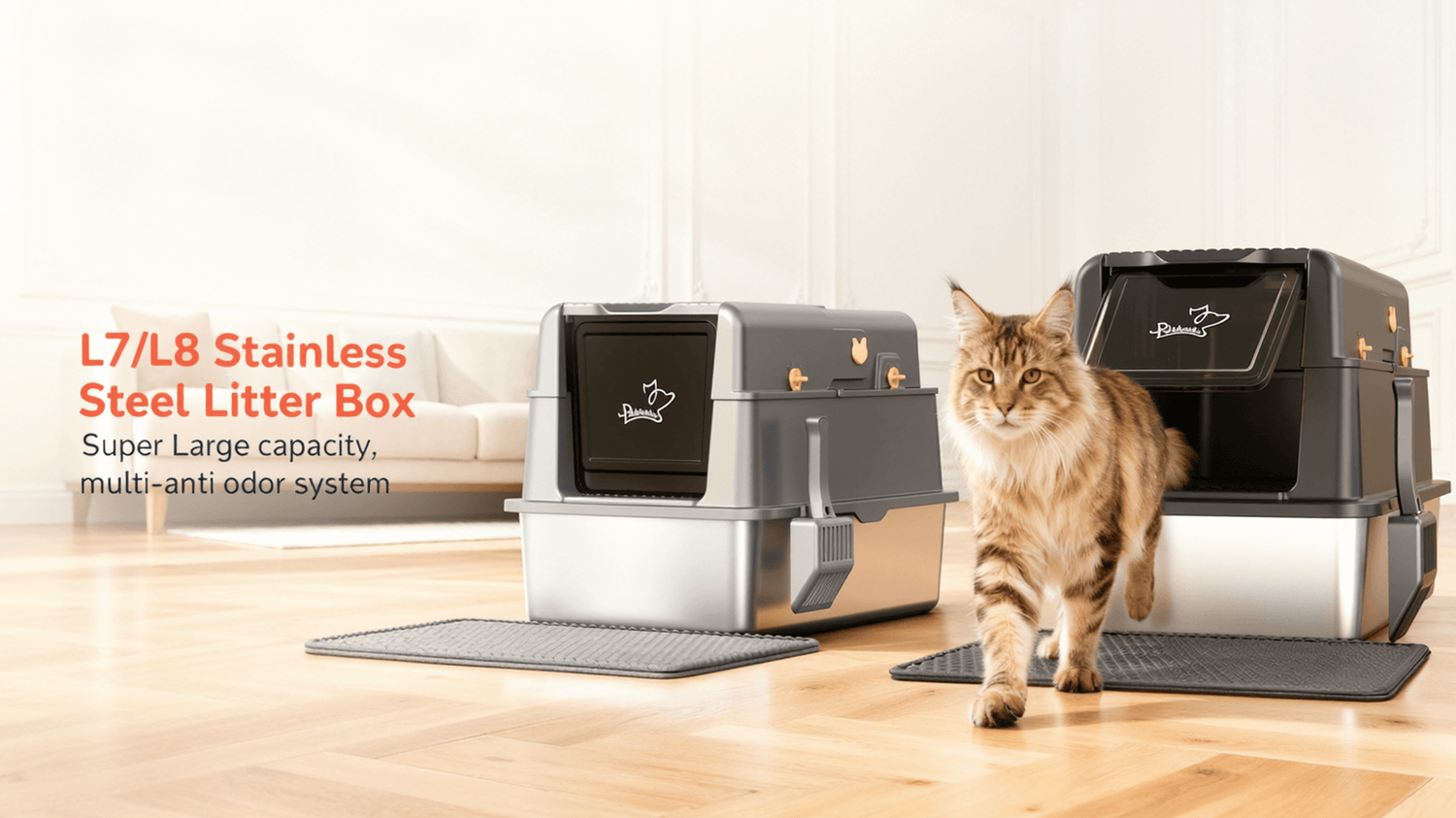
Introduction: The "Goldilocks" Problem for Large Cats
If you share your home with a Maine Coon, Ragdoll, or Savannah cat, you know the struggle is real. You buy the largest "Jumbo" plastic litter pan at the pet store, only to watch your 20-pound gentle giant struggle to turn around inside it. They step in their own waste, or worse—they stand tall and accidentally spray urine right over the edge onto your wall.
For years, owners of large breeds have been forced to improvise with ugly DIY plastic storage totes just to get the necessary space. But in 2026, the game has changed.
The era of the scratched, smelly plastic bin is over. The new standard for large breed hygiene is the extra large stainless steel cat litter box. It’s not just about luxury; it’s about biology. A cramped cat is a stressed cat, and for breeds that can reach up to 40 inches in length, size isn't just a preference—it's a medical necessity. This guide will walk you through sizing, placement, and why upgrading to an XXL stainless steel solution is the best investment you’ll make for your gentle giant this year.
Sizing Guide: How Big Should a Litter Box Be?
Most "large" boxes on the market measure about 18 to 20 inches long. For a 10-pound domestic shorthair, that's fine. For a 20-pound Ragdoll? It's a claustrophobic nightmare.
The 1.5x Length Rule
Veterinarians and animal behaviorists agree on a "Golden Rule" for litter box sizing: The box should be at least 1.5 times the length of your cat (from nose to the base of the tail).
Let’s do the math:
Average Cat Length: 18 inches → Needs a 27-inch box.
Maine Coon Length: Often 20-25 inches → Needs a 30-37 inch space (or the largest possible commercial option).
If your cat has to crouch, hunch, or hang their butt over the edge to do their business, the box is too small. This isn't just uncomfortable; it causes "litter box aversion," leading them to find more spacious places to go—like your living room rug.
Depth and Height Matters
It’s not just about floor space; it’s about verticality. Large cats have long legs. A standard 8-inch wall is merely a speed bump for a Maine Coon. They often suffer from "elevator butt"—where they stand to pee, aiming high. Without a high sided stainless steel litter box (ideally 15+ inches), the urine ends up on your floor. If you are still deciding whether material or size matters more, start with our [stainless steel vs plastic litter box comparison].
Why Stainless Steel is Non-Negotiable for Giant Breeds
You might be tempted to just buy a bigger plastic bin. Here is why that is a mistake for large breeds.
The "Claw Factor"
Maine Coons and Ragdolls are powerful. When they cover their waste, they dig hard.
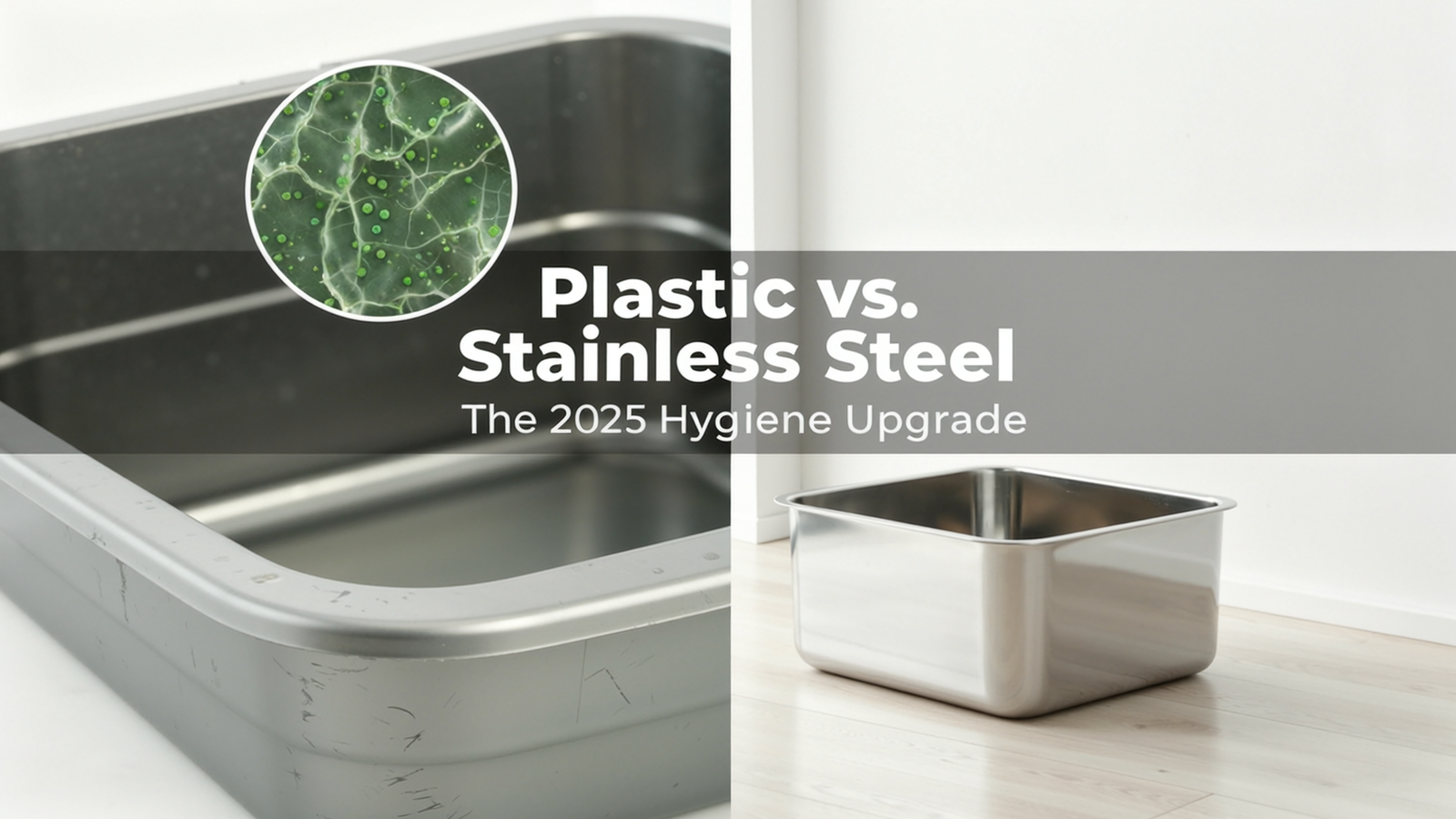
Plastic: Soft plastic develops deep gouges and scratches within weeks. These scratches trap microscopic waste particles and bacteria that no amount of scrubbing can remove. This is the source of that permanent "cat smell."
Stainless Steel: High-quality 304-grade stainless steel is virtually scratch-proof. Your large cat can dig to China, and the surface will remain smooth, non-porous, and odor-free.
Odor Control on a Large Scale
Bigger cats produce more waste. A plastic box absorbs those odors over time, becoming a permanent stink beacon. An XXL stainless steel cat litter box does not absorb odor. You can wipe it clean after 5 years of use, and it will be as fresh as the day you bought it.

The PalNests Advantage: True XXL Dimensions
We recognized that the market was failing big cats. That’s why PalNests engineered a box specifically for the "Big Boys" of the cat world.
The Specs that Matter:
● Length: Up to 28 inches (providing that critical turning radius).
● Width: 20.5 inches (wide enough for broad shoulders).
● Height: 17.4 inches (The ultimate shield against high-spraying).
This isn't a dog pan repurposed for cats; it's a Litter Box For Large Box needs, designed to contain the mess of a 25lb animal while offering them the dignity of a clean, spacious bathroom.
Placement Guide: Where to Put a Giant Litter Box?
Let’s be honest: A 28-inch metal box doesn’t fit in the tiny gap next to the toilet. Owning a large cat means making real estate concessions.
The "Landing Strip" Concept
Large cats need a "runway." Do not jam the box entry against a wall or cabinet. Ensure there is at least 2 feet of open space in front of the entry. Large cats are less agile than kittens; they need space to step out, shake their paws, and walk away without feeling trapped.
Best Rooms for XXL Boxes
● The Mudroom/Laundry Room: Ideally on a ground floor. These rooms often have durable flooring and extra space.
● Bedroom Corners: Since stainless steel controls odor so effectively, you can place a PalNests box in a bedroom corner without fear of the smell keeping you awake.
● The "Dead Space" Hallway: If you have a wide hallway, a long box can sit against the wall without blocking traffic.
Health Benefits of "Going Big"
Switching to an extra large stainless steel cat litter box is a preventative health measure.
UTI Prevention
When a box is too small, cats often "hold it" to avoid the discomfort of entering the cramped space. Holding urine concentrates minerals, leading to crystals and Urinary Tract Infections (UTIs). A spacious box encourages frequent, stress-free elimination.
Joint Health
Ragdolls and Maine Coons are prone to hip dysplasia and arthritis as they age. A high-sided box with a lowered entry point (or a step) allows them to enter easily, while the spacious interior means they don't have to contort their painful joints into awkward squatting positions.
 Maintenance Tips for Large Stainless Steel Boxes
Cleaning an XXL box is slightly different than a standard pan.
1. The "Big Scoop" Rule: Don't use a tiny plastic scoop. Use a heavy-duty metal scoop that can handle the volume of litter in a 28-inch pan.
2. Litter Depth: Fill it 3-4 inches deep. This prevents urine from hitting the bottom, making scooping effortless as clumps slide right off the non-stick steel.
3. Deep Cleaning: Because the PalNests box is huge, it might not fit in a bathroom sink. The bathtub or an outdoor hose is your best friend for the monthly deep clean. The good news? Biofilms don't stick to steel, so a quick rinse usually does the trick—no scrubbing required.
What should large-cat owners compare before buying?
For Maine Coon cats, the biggest mistake is choosing a box that sounds large but still feels cramped in real use.
Compare these four things first:
- usable length and width
- side height for spray control
- how easy the surface is to clean
- whether the box is better suited to one large cat or a multi-cat home
If your cat regularly turns awkwardly, pees near the wall, or stands partly outside the box, sizing is already the main issue.
Quick Takeaways
● Size Rule: Large cats need a box 1.5x their length; standard boxes cause stress and accidents.
● Material: Stainless steel litter boxes for Maine Coons are superior to plastic because they resist claw scratches and bacterial buildup.
● Height: Look for sides at least 15-17 inches high to prevent urine spray from tall cats.
● Health: Spacious boxes prevent UTIs and support joint health in aging large breeds.
● Product Pick: The PalNests XXL (28"L x 20.5"W) offers the necessary square footage that standard "jumbo" boxes lack.
● Placement: Ensure a "landing strip" for easy entry/exit; avoid cramped bathroom corners.
You can also browse our full [cat litter box collection].
Conclusion
Your Maine Coon or Ragdoll brings a huge amount of love into your life—they deserve a bathroom that fits them. Forcing a large cat to use a standard plastic bin is like asking an NBA player to sleep in a toddler bed. It’s uncomfortable, unhygienic, and eventually, it’s going to break.
In 2026, upgrade to the Best Stainless Steel Litter Box for Large Cats. The PalNests XXL model isn't just a purchase; it's a lifetime investment in your cat's comfort and your home's cleanliness. Say goodbye to the smell of scratched plastic and hello to the sleek, spacious durability of stainless steel.
Ready to give your giant the space they need? [Shop thePalNests XXL Stainless Steel Collection Here]. If your cat is moving from a smaller plastic tray, this guide on [switching to a stainless steel litter box] can make the transition easier.
Frequently Asked Questions (FAQs)
1. Is a stainless steel litter box worth it for a Maine Coon? It often is, especially if your cat is large-bodied, scratches hard, or tends to spray over the edge. The biggest gain usually comes from combining the right size with a surface that stays easier to clean over time.
2. What is the largest stainless steel litter box available? While many brands claim "XL," the PalNests XXL Stainless Steel Litter Box offers true jumbo dimensions of 28"L x 20.5"W x 17.4"H, making it significantly larger than standard 23-inch pans.
3. Will a metal litter box be too cold for my Ragdoll? This is a common myth. While metal conducts temperature, once filled with 3-4 inches of litter, the cat's paws rarely touch the bottom. The litter provides insulation, making the box comfortable year-round.
4. How do I stop my large cat from peeing over the side of the box? "Elevator butt" is common in tall breeds. The only solution is higher walls. A standard 10-inch box is too low. You need a high sided stainless steel cat litter box with walls at least 15-17 inches high, like the PalNests model, to contain the spray.
5. How much litter do I need for an XXL stainless steel box? Because of the larger surface area (28x20 inches), you will need more litter to start—typically 20-25 lbs to achieve a 3-inch depth. However, because stainless steel stays cleaner and clumps don't stick, you often waste less litter during scooping in the long run.


Leave a comment
This site is protected by hCaptcha and the hCaptcha Privacy Policy and Terms of Service apply.