
AYou love your cat, but you probably hate their cat tree. It starts as a beige palace of fun, but within months, it transforms into a shredded, hair-covered eyesore that smells vaguely of dust and old carpet.
For modern pet owners, the furniture we bring into our homes must meet a dual standard: it must satisfy feline instincts (climbing, scratching, hiding) and meet human standards (hygiene, aesthetics, and sustainability).
If you are hesitating between the traditional plush tower, the durable sisal post, or the emerging trend of high-density cardboard, this guide breaks down the materials to help you make the rational choice.
The Big Three: A Material Comparison
1. Plush and Carpet: The Traditional Trap
For decades, carpeted cat trees were the default. They are soft and initially cozy. However, they represent outdated design philosophy. Carpet is designed for walking, not shredding. When cats scratch plush, loops snag claws, and the fabric holds onto everything—dirt, dander, and odors.
2. Sisal Rope: The Durable Contender
Sisal cat scratchers are a step up. This natural fiber is tough and provides excellent traction for claw shedding. While durable, sisal has drawbacks. It is often glued to posts (making replacement difficult), and the "industrial" look rarely blends with modern minimalist decor. Furthermore, low-quality sisal can be rough on paw pads over time.
3. Cardboard: The Modern Revolution
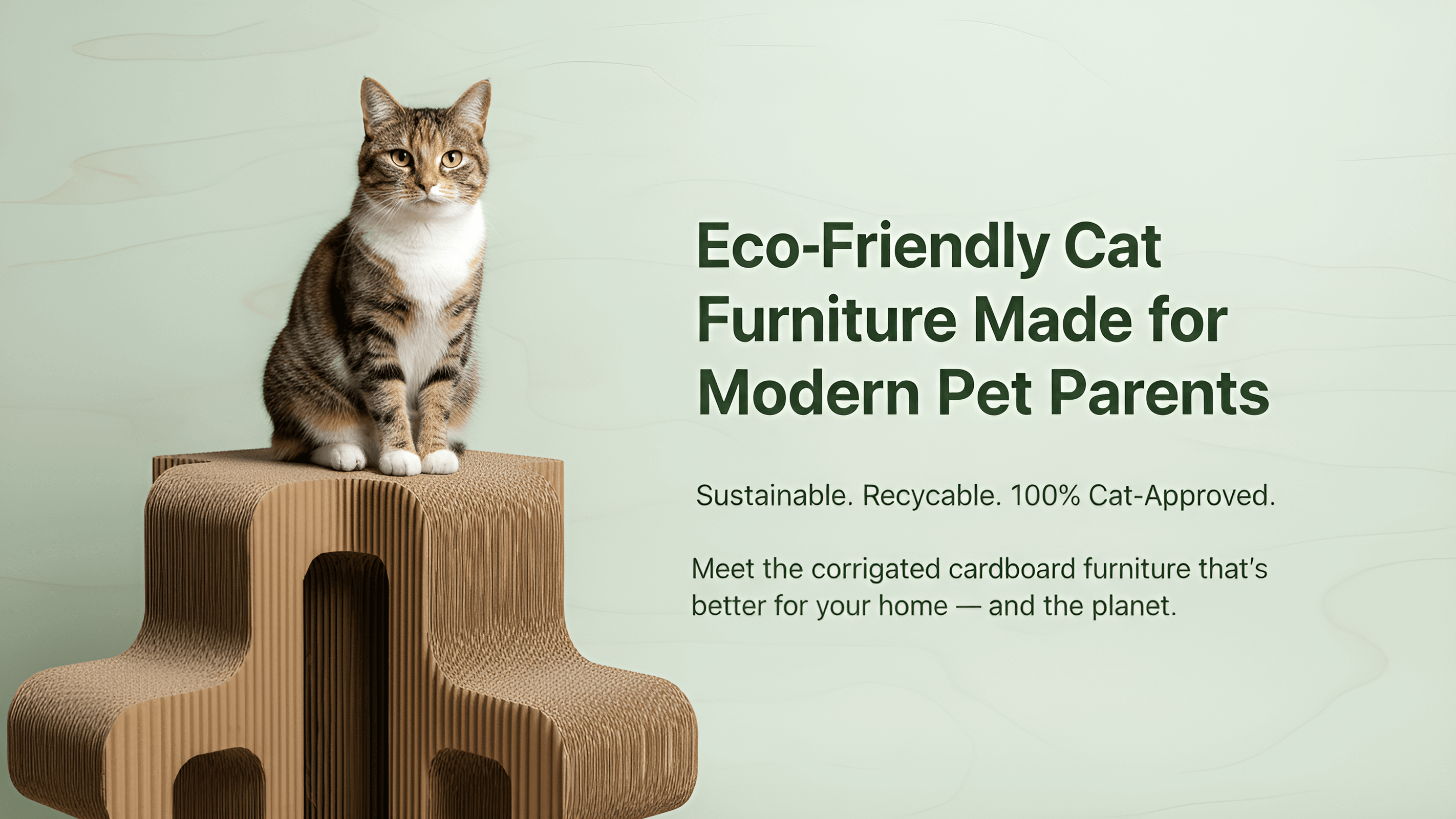
Forget the flimsy cardboard of the past. Modern high-density corrugated cardboard is engineered for longevity. It offers a unique texture that cats instinctively prefer because it allows them to sink their claws in without snagging. It is the only material in this list that is fully biodegradable, lightweight, and capable of modular design.
The "Hygiene Gap": Why Plush Fails the Modern Home
If you are a hygiene-conscious pet owner, the material of your cat tree matters more than you think.
The Dust Mite Trap
According to veterinary dermatologists, carpeted trees are havens for dust mites and flea larvae. The dense fibers trap organic matter (dead skin, hair) deep within the pile, creating a breeding ground that is nearly impossible to vacuum effectively.
The "Impossible to Clean" Factor
When a cat vomits on a plush tree—and they will—you are left with a permanent stain. You cannot disassemble a stapled carpet tree to put it in the washing machine.
● The Cardboard Advantage: High-density cardboard surfaces are smooth. They don't trap hair. If a specific module gets soiled or worn out, you simply recycle that piece and replace it, rather than throwing away the entire furniture unit. Why Modern Cardboard Wins on Functionality
The latest generation of cardboard cat furniture (like our 3-in-1 modular systems) addresses the historic complaints about cardboard: durability and stability.
Engineered for Stability
A common fear is that cardboard is "wobbly." However, modern designs utilize multi-layer structural engineering. By stacking high-density sheets with reinforced tunnels, these structures create a low center of gravity. This solves the "wobbly post" complaint common with tall, top-heavy sisal trees.
Modular DIY Design
Traditional trees are static. Once you buy it, it stays that shape forever. Modern cardboard systems feature modular interconnectivity.
● Combat Boredom: You can reconfigure the shape from a tunnel to a tower.
● Custom Fit: Adjust the size to fit your living room corner perfectly.
● Interactive: The act of building and modifying the tree gives you a sense of participation in your pet’s life.

Sustainability and Safety
In an era of green consumption, plastic and chemically treated carpets are losing favor.
● Recyclable: Made from environmentally regenerative paper.
● Non-Toxic: Free from the glues and formaldehyde often found in cheap particle board trees.
● Carbon Footprint: When the product's life ends, it returns to the earth, not a landfill.
 Quick Takeaways: The Rational Choice
● Hygiene: Cardboard and smooth surfaces prevent allergen buildup; plush traps it.
● Maintenance: Cardboard wipes clean and doesn't hold hair; plush requires heavy vacuuming.
● Longevity: Modular designs allow you to replace worn parts rather than the whole unit.
● Instincts: Cats prefer the "shred-ability" of cardboard for scent marking and stress relief.
● Aesthetics: Modern cardboard designs offer a minimalist look that fits contemporary decor better than beige carpet.
Conclusion
Choosing a cat tree is no longer just about giving your cat something to climb; it’s about integrating pet furniture into a healthy, clean home. While sisal offers durability and plush offers softness, neither can compete with the hygiene, versatility, and sustainability of modern high-density cardboard.
For the rational consumer, the choice is clear: ditch the dust trap and embrace the clean, modular revolution.
Frequently Asked Questions (FAQs)
Q1: Isn't cardboard messy? Won't my cat shred it everywhere?
A1: Standard cardboard boxes shred easily, but high-density corrugated cardboard is compressed to be much tougher. While some flakes are normal (and satisfy the cat's urge to "mark" territory), high-quality scratchers produce significantly less dust than sisal rope fraying.
Q2: Can cardboard cat trees really support a heavy cat?
A2: Yes. The structural integrity comes from the honeycomb geometry of the corrugation. When layered properly in a block or tunnel design, these trees can support the weight of even large breeds like Maine Coons without wobbling.
Q3: How do I clean a cardboard cat tree?
A3: Unlike plush, you don't need vacuums or shampoos. Simply wipe the smooth outer surfaces with a dry or slightly damp cloth to remove dust. Cat hair doesn't stick to it, so a quick sweep is usually all that's needed.
Q4: How long does a high-density cardboard scratcher last?
A4: Depending on usage, a high-quality unit can last 6 months to 2 years. The advantage of modular systems is that if one scratching block wears out, you can flip it over or replace just that piece, extending the life of the whole structure.
Q5: Why do cats seem to prefer cardboard over expensive carpet trees?
A5: It’s about texture and temperature. Cardboard warms up quickly to the cat's body heat for lounging. For scratching, the texture allows for a satisfying "tear" that mimics tree bark, which releases stress more effectively than snagging their claws in carpet loops.


Leave a comment
This site is protected by hCaptcha and the hCaptcha Privacy Policy and Terms of Service apply.