
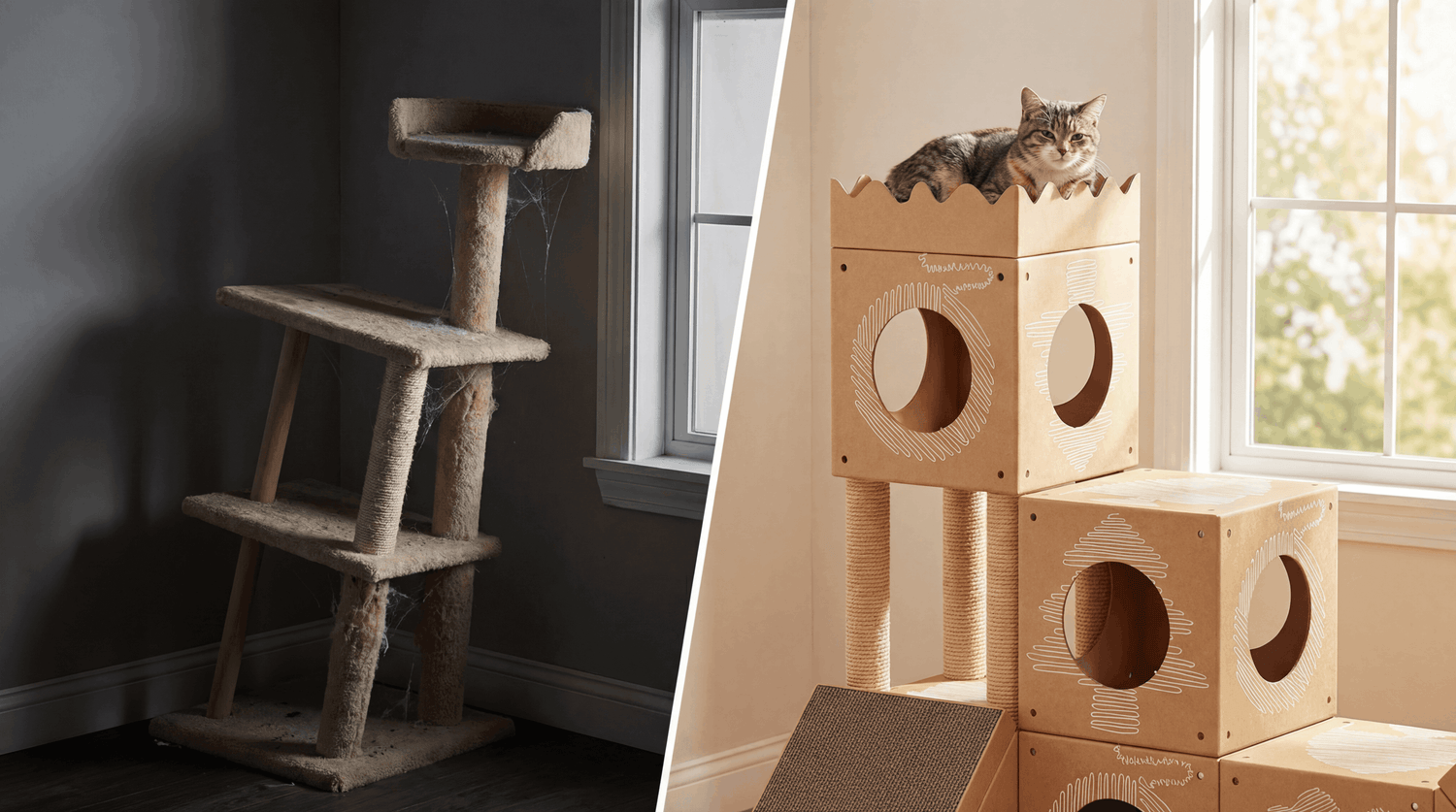
Common cat tree mistakes most owners only realize after it’s too late
Introduction
If you’ve ever bought a cat tree that ended up unused, wobbly, or falling apart within months, you’re not alone. Many cat owners don’t fail at choosing a cat tree — the market fails them first.
Search results are flooded with “best cat tree” lists, but very few explain why so many cat trees fail in real homes. The truth is, most disappointment comes from common cat tree mistakes made at the buying stage, not from cats being “picky” or “lazy.”
This guide isn’t here to scare you into overbuying. It’s here to help you avoid wasting money, avoid frustrating your cat, and avoid repeating mistakes you’ve already paid for once.
In this article, we’ll break down:
● Why cat trees fail in everyday use
● The most common cat tree mistakes owners regret
● What actually matters to cats (not marketing photos)
● How to choose a cat treethat fits your space, your cat, and your life
If you’re thinking “I just don’t want to buy the wrong one again” — you’re exactly where you should be.
Why Cat Trees Fail — The Real Reasons
Most cat trees don’t fail because cats don’t like them. They fail because they’re designed around human assumptions, not feline behavior.
Stability & Wobbling Issues
A slightly unstable cat tree may look harmless to humans — but to cats, it’s a deal-breaker. Cats rely on predictable surfaces to feel safe. Once a platform shifts under their weight, many cats permanently lose trust in it.
This is one of the most overlooked common cat tree mistakes: assuming “almost stable” is good enough.
Poor Materials & Durability Problems
Low-density particle board, thin sisal rope, glued-on carpet — these materials degrade fast. Once scratching posts loosen or surfaces shed fibers, cats stop engaging. Owners then assume the cat tree “doesn’t work,” when in reality, it simply didn’t last long enough.
Design Mistakes: Size, Levels & Accessibility
Many cat trees look tall but offer:
● platforms too small to turn around on
● jumps that are too far apart
● awkward ladder placements
Cats don’t care about height alone — they care about flow.
Ignoring Cat Preferences & Behavior
Age, weight, confidence level, and play style matter. A shy senior cat and a young climber have completely different needs — yet most trees are marketed as “one size fits all.”
Mistake #1 — Buying Cheap, Low-Quality Models
Price is often the first filter — and the first trap.
Cheap cat trees often:
● loosen within weeks
● shed fibers or odors
● fail weight-bearing tests over time
The real cost isn’t the price tag — it’s replacement.
How Quality Affects Longevity
A cat tree that collapses or wears out fast teaches your cat one thing: this structure can’t be trusted. Once that association forms, even replacements struggle to regain interest.
Hidden Health Risks in Poor Materials
Low-quality glues, synthetic carpets, and untreated wood may release smells cats dislike or avoid instinctively. Humans often miss this completely.
Why Budget Trees “Work” — Until They Don’t
Many owners report the same pattern:
1. Cat uses it briefly
2. Stability decreases
3. Cat stops engaging
4. Owner blames cat
This is one of the most expensive cat tree buying mistakes long-term.
Mistake #2 — Choosing the Wrong Size or Layout
Bigger isn’t always better. Smaller isn’t always safer.
Measuring Your Space (Before You Buy)
Vertical space matters — but so does footprint. A tall tree in a narrow base is a recipe for wobble. A wide tree in a tight apartment becomes an obstacle instead of enrichment.
Cat Size, Age & Mobility
Large cats need wider platforms. Older cats need gradual steps, not dramatic leaps. Ignoring this leads to avoidance, not adaptation.
When Height Works Against You
Some cats prefer mid-level observation zones. A tree that forces vertical extremes may never feel comfortable.
Mistake #3 — Ignoring Stability & Safety
If there’s one mistake cats never forgive, it’s instability.
How a Wobbly Tree Affects Confidence
Once shaken, a cat may:
● refuse upper levels
● avoid jumping
● stop scratching
The tree becomes decorative furniture instead of a behavioral tool.
Real Safety Risks
Falls, claw slips, and tipping incidents are more common than brands admit. Stability is not a “nice-to-have” — it’s foundational.
How to Spot Stability Red Flags
● Narrow bases
● Single-pillar designs without reinforcement
● Lightweight construction for tall heights
Mistake #4 — Overlooking Maintenance & Hygiene
A cat tree that’s hard to clean becomes a problem fast.
Odor & Buildup
Cats are sensitive to scent. Hair, dander, and absorbed oils change how a surface smells — and whether a cat continues using it.
Materials That Age Poorly
Carpeted trees often trap debris permanently. Once odor sets in, cats may abandon the structure entirely.
Hygiene Is Behavioral, Not Just Visual
A clean-looking tree can still repel cats if scent retention is poor.
Mistake #5 — Buying Design-Only Cat Trees
Instagram-ready doesn’t mean cat-ready.
Aesthetics vs Function
Many modern cat trees prioritize:
● symmetry over flow
● minimalism over comfort
Cats don’t care how it looks — only how it feels.
When Style Overrides Use
If a platform is beautiful but slippery, cats won’t stay. If a scratch post looks elegant but flexes, cats won’t trust it.
Mistake #6 — Not Considering All Cats in the Home
Multi-cat households multiply mistakes.
Resource Competition
One central perch creates conflict. Vertical zoning matters more when more than one cat is involved.
Personality-Based Design
Confident cats claim height. Timid cats need escape routes. Ignoring this leads to stress, not enrichment.
How to Avoid These Mistakes — A Buyer’s Checklist
Before buying, ask:
● Is the base wide enough for the height?
● Are platforms sized for my cat to fully turn around?
● Can it be cleaned or refreshed over time?
● Does the layout match how my cat moves, not how it looks?
Red Flags
● “Decorative” materials only
● No weight ratings
● No replacement or modular options
Better Alternatives to Traditional Cat Trees
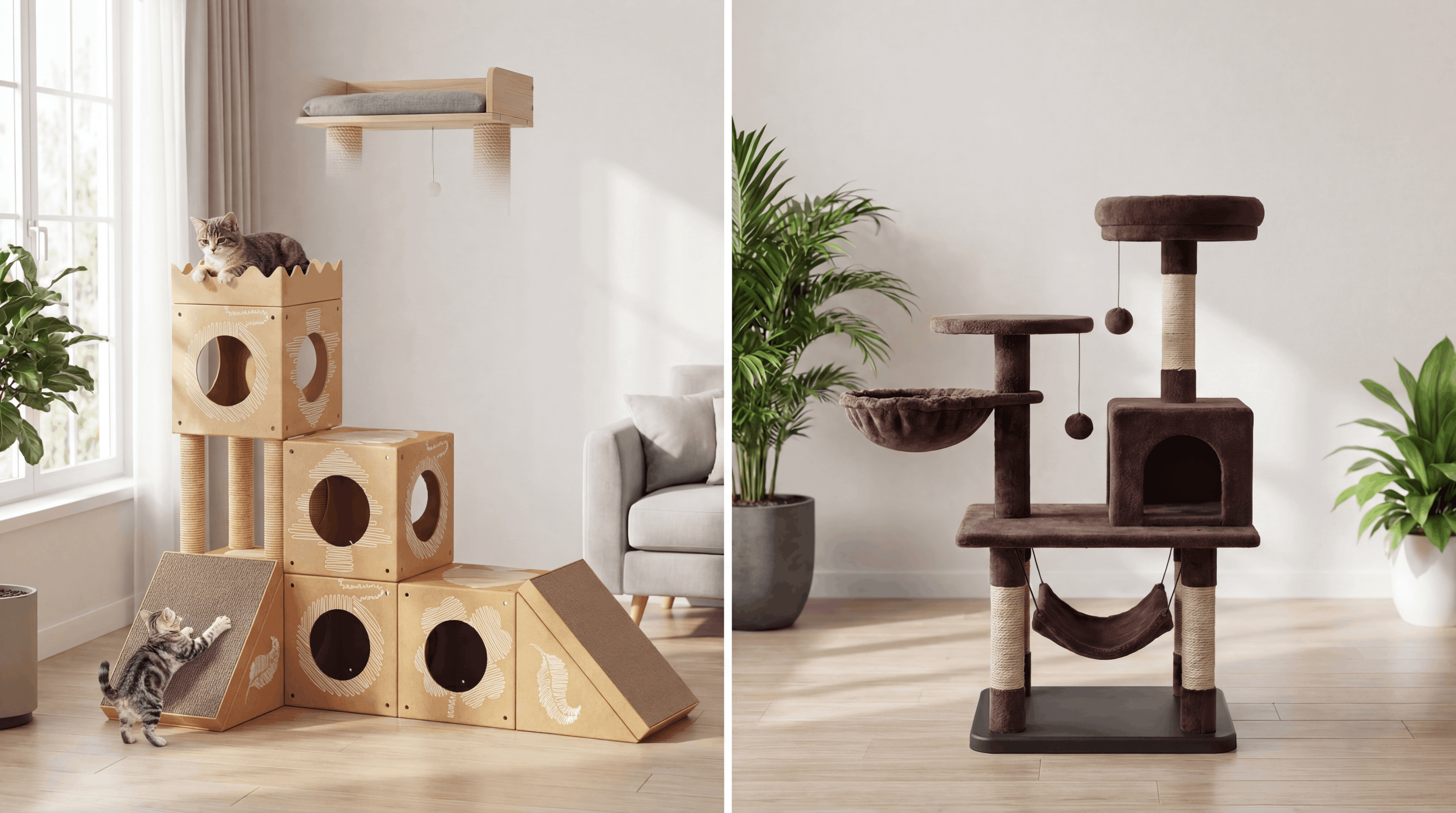
Modular Cat Trees
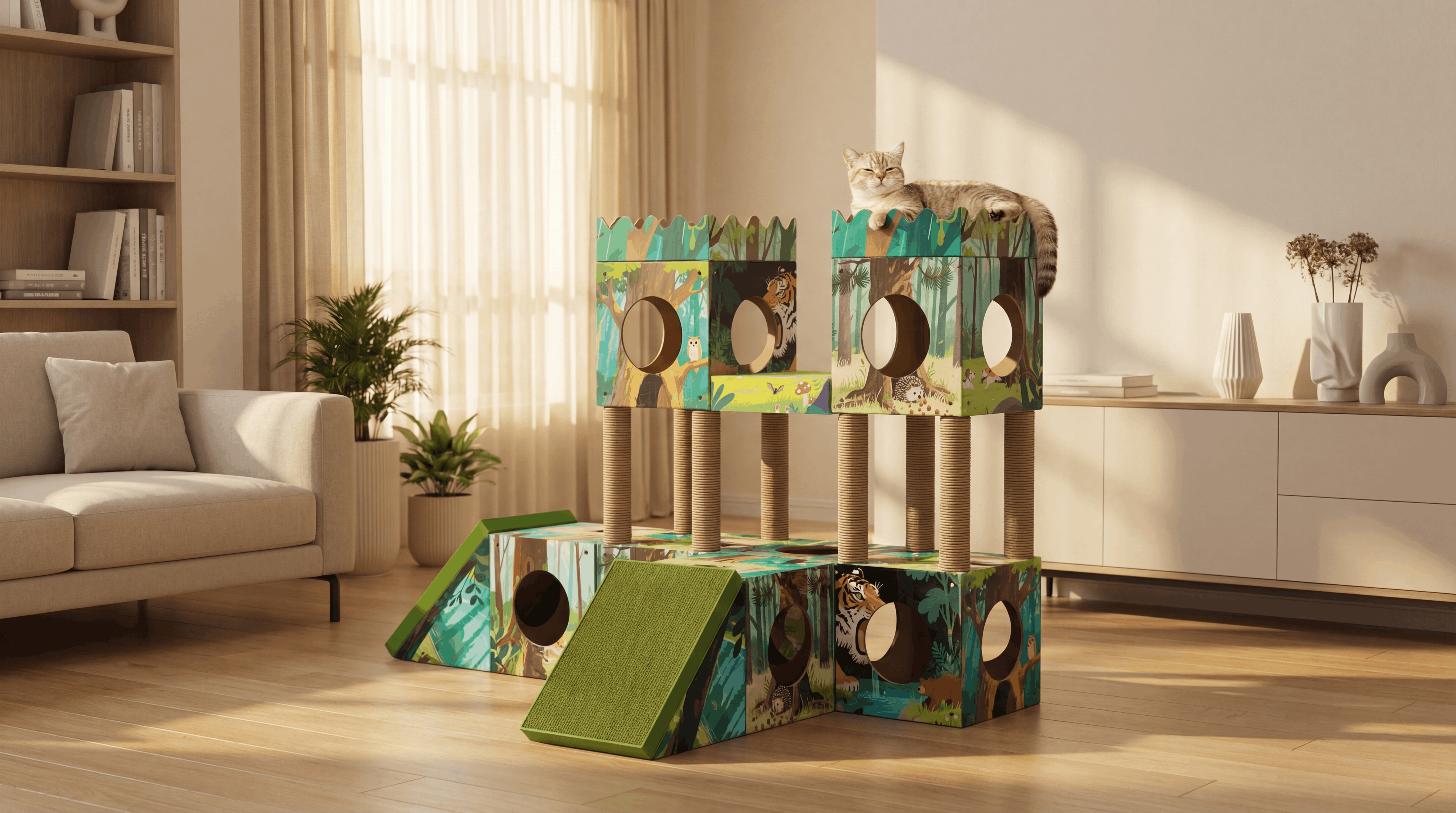
Modular systems adapt as cats age, homes change, or space shifts. Instead of replacing the whole structure, you adjust parts.
Wall-Mounted or Hybrid Solutions
For small apartments or multi-cat homes, distributing vertical space reduces conflict and improves usage.
Quick Takeaways
● Most cat tree failures come from design and stability, not cats
● Cheap materials cost more long-term
● Cats value trust over novelty
● Size and layout matter more than height
● Maintenance affects long-term use
● Avoiding common cat tree mistakes saves money and stress
Conclusion
Buying the wrong cat tree isn’t a personal failure — it’s a predictable outcome of an industry that prioritizes appearance over behavior.
By understanding why cat trees fail, you shift from guessing to choosing intentionally. You stop replacing furniture every year. You stop blaming your cat. And you start building an environment that actually works.
The best cat tree isn’t the most expensive or the tallest — it’s the one that fits your cat’s movement, confidence, and daily habits.
Avoid the mistakes once, and you’ll never have to “try again.”
FAQs
Are cat trees really necessary?
Not mandatory, but they provide vertical territory, scratching outlets, and stress reduction — when chosen correctly.
What is the most common cat tree mistake?
Ignoring stability. A wobbly tree quickly becomes unused.
How long should a good cat tree last?
Quality structures should last years, not months.
Do cats prefer tall or wide cat trees?
Cats prefer stable layouts with accessible platforms, not just height.
Can modular cat trees reduce waste?
Yes. Modular systems adapt instead of being replaced entirely.

Leave a comment
This site is protected by hCaptcha and the hCaptcha Privacy Policy and Terms of Service apply.