
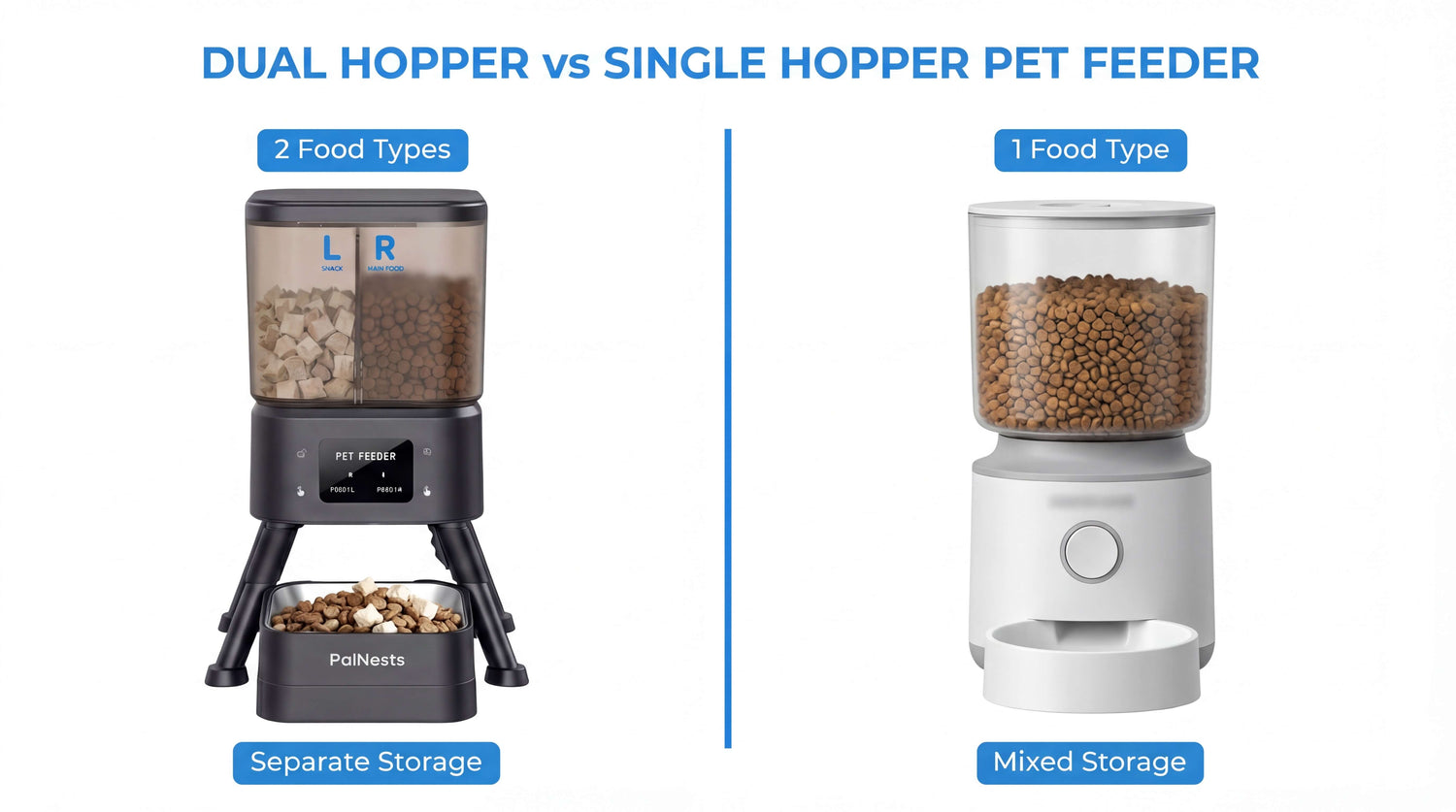
If you are currently browsing for a smart feeder, you’ve likely noticed a significant price divide. On one side, you have the classic single-chamber feeders; on the other, the high-tech, dual hopper vs single hopper pet feeder debate begins.
Usually, a dual-chamber model costs 30% to 50% more than its single-tank counterpart. As a rational consumer, your first question is naturally: Is a dual feeder worth it? Or is it just another "over-engineered" gadget for pampered pets?
Today, we’re stripping away the marketing fluff. We’ll look at the physics of food storage, the reality of multi-cat dynamics, and the long-term economics of pet health to help you decide if the upgrade is a luxury or a necessity.
Understanding the Single Hopper: What Are You Sacrificing?
Single-hopper feeders are the "entry-level" of automation. They do one thing well: they drop food at a scheduled time. However, they force you into a one-size-fits-all feeding strategy.
The Problem with "The Mix"
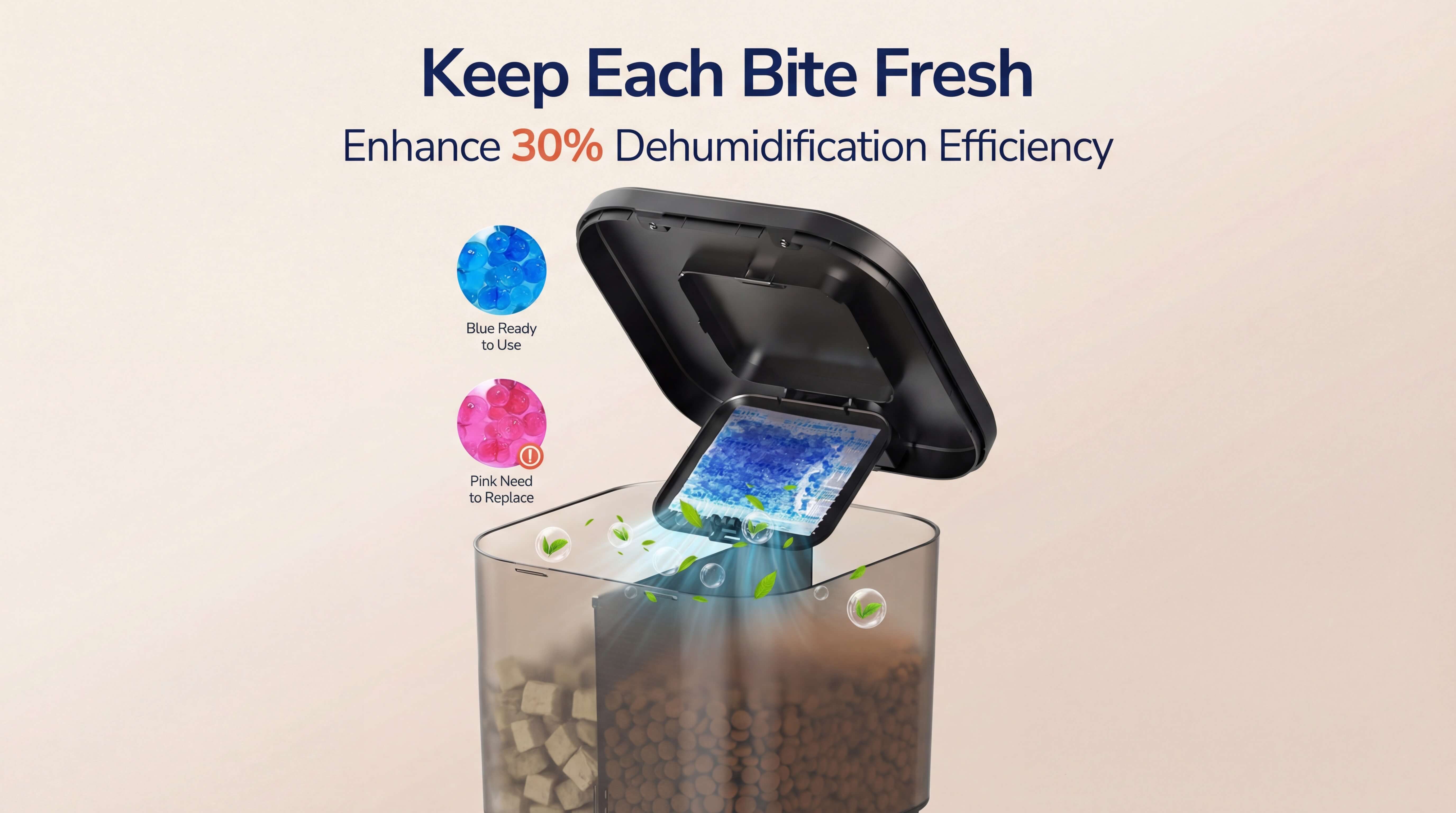
If you want to give your cat variety—perhaps mixing standard kibble with expensive freeze-dried toppers—you have to pre-mix them in the single tank. As we’ve discussed in previous guides, this leads to moisture migration. The dry food pulls moisture from the air and the toppers, leading to staleness and potential mold. In a single hopper, your "variety" actually shortens the shelf life of the food.
Lack of Nutritional Flexibility
With a single bin, you cannot adjust ratios on the fly. If your cat needs more protein in the morning and more fiber at night, you’re out of luck. You are essentially locked into a monotonous diet until the 4L or 6L tank is empty.
The Science of Dual Hopper Technology: Why it Actually Costs More
A dual hopper vs single hopper pet feeder isn't just about adding a plastic divider. It involves a fundamental change in the machine's "brain" and mechanical heart.
● Independent Motors: True dual-chamber feeders like the PalNests model use independent dispensing mechanisms. This ensures that one chamber can dispense 5 grams while the other dispenses 20 grams, without any cross-contamination.
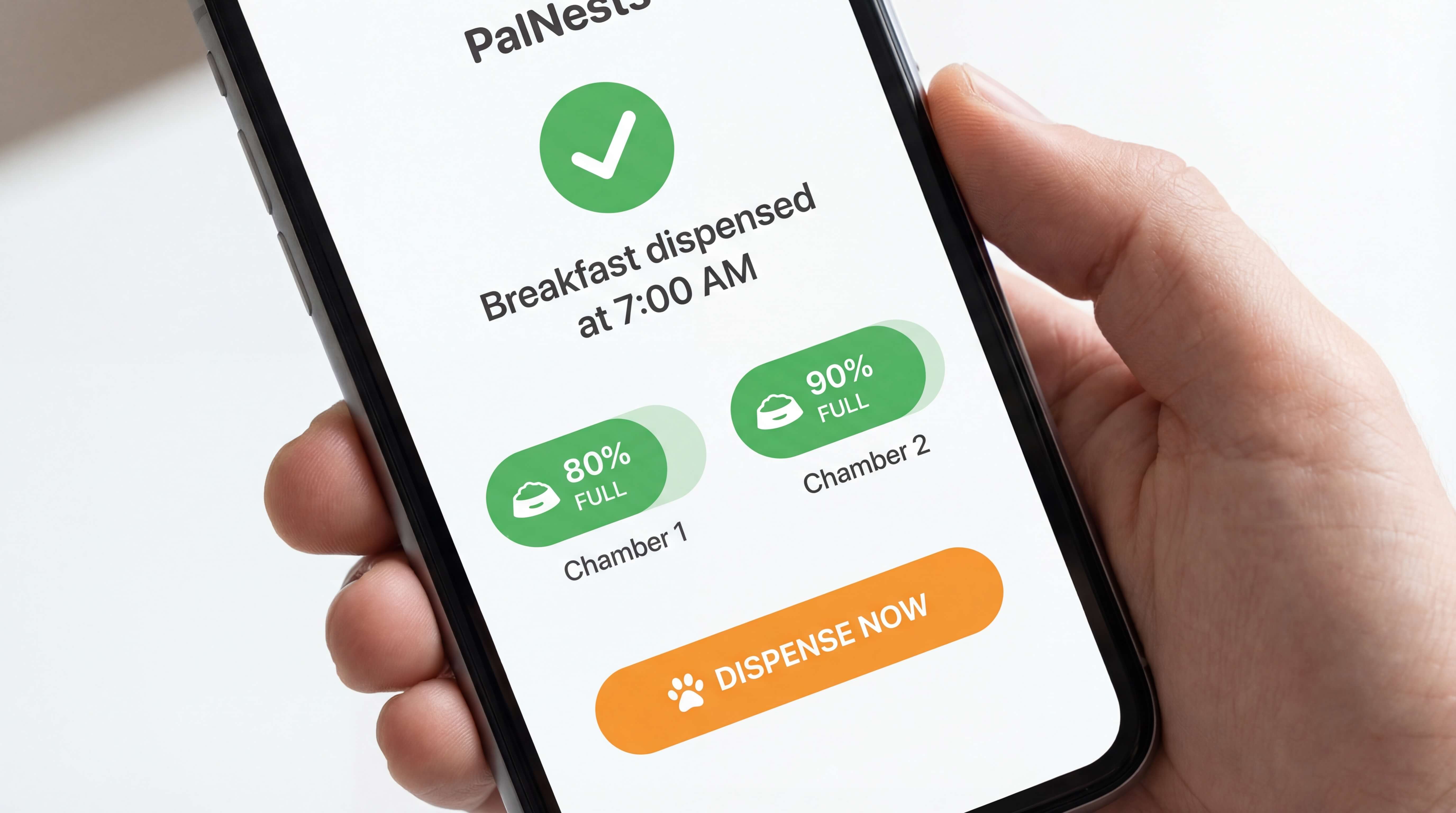
● App Logic: The software required to manage two separate schedules and combined calorie tracking is significantly more complex, offering you the remote pet feeding precision that single-bin apps lack.
Scenario: Why the Upgrade Pays for Itself
1. The Multi-Cat Peace Treaty
If you have two cats, buying one dual-chamber feeder with a splitter is almost always cheaper than buying two separate high-quality single feeders. Not only do you save on the initial purchase, but you also save valuable floor space and the hassle of managing two separate apps.
2. The Medical Diet Manager
Does your cat have crystals, kidney issues, or obesity? Prescription diets are incredibly expensive—sometimes triple the price of standard kibble. In a single hopper, you’d be wasting that expensive food on a healthy cat or mixing it inefficiently. A dual feeder allows you to dispense the exact amount of medical food needed, mixed with a "tasty" base to ensure they actually eat it.
Is a Dual Feeder Worth It? A Long-Term Cost Analysis
Let's do the math.
● Food Waste: In a single hopper, the last 15% of a mixed bag of food often becomes dusty or stale, leading to many owners throwing it away. Over a year, that’s $30-$50 of wasted high-end kibble.
● Longevity: Dual feeders are often built with higher-torque motors to handle the variety of food shapes. They tend to have lower "clog rates," meaning fewer replacements.
When you factor in the savings from reduced food waste and the prevention of obesity-related vet bills, the "extra $50" for a dual hopper usually pays for itself within the first 6-8 months.
ys
● Single hoppers are fine for single-pet households on a very tight budget with a single food type.
● Dual hoppers are essential for anyone using freeze-dried toppers or managing multi-cat households.
● Freshness is the winner: Separation prevents moisture migration and food spoilage.
● Economic Value: The higher upfront cost is offset by reduced food waste and better nutritional management.
● PalNests provides the most rational middle-ground: premium dual-chamber features at an accessible price point.
Conclusion: Making the Final Decision
So, is a dual feeder worth it? If your feeding philosophy is "just get the calories in the bowl," a single hopper is sufficient. But if you view feeding as a cornerstone of health—incorporating variety, managing weight, and ensuring maximum freshness—then the upgrade to a dual hopper vs single hopper pet feeder is one of the smartest investments you can make for your home.
The PalNests Dual Chamber Smart Feeder isn't just about luxury; it’s about precision. It gives you the tools to be a better pet parent while actually saving you money and stress in the long run.
Don't settle for "good enough" when your pet's health is on the line. Choose the flexibility and freshness that only a dual-chamber system can provide.
FAQ: Rational Buying Decisions
Q: Can I just buy two cheap single feeders instead?
A: You could, but you’d be managing two power cords, two apps, and taking up twice the floor space. A dual-chamber feeder is a more elegant and integrated solution.
Q: Will the dual-chamber feeder be too complicated for me?
A: Not at all. The PalNests app is designed for "One-Tap" setup. Once you set your ratios, the machine handles the complex math for every meal.
Q: Is it harder to clean two chambers?
A: No, because our chambers are modular. You can pop them out and wash them just as easily as a single tank.
Q: Does it use more electricity?
A: The difference is negligible. The motors only run for a few seconds a day.
Q: What if I only have one cat? Is it still worth it?
A: Yes! Even for one cat, the ability to separate treats/toppers from kibble ensures they don't get bored or "nutritionally fatigued."

Leave a comment
This site is protected by hCaptcha and the hCaptcha Privacy Policy and Terms of Service apply.