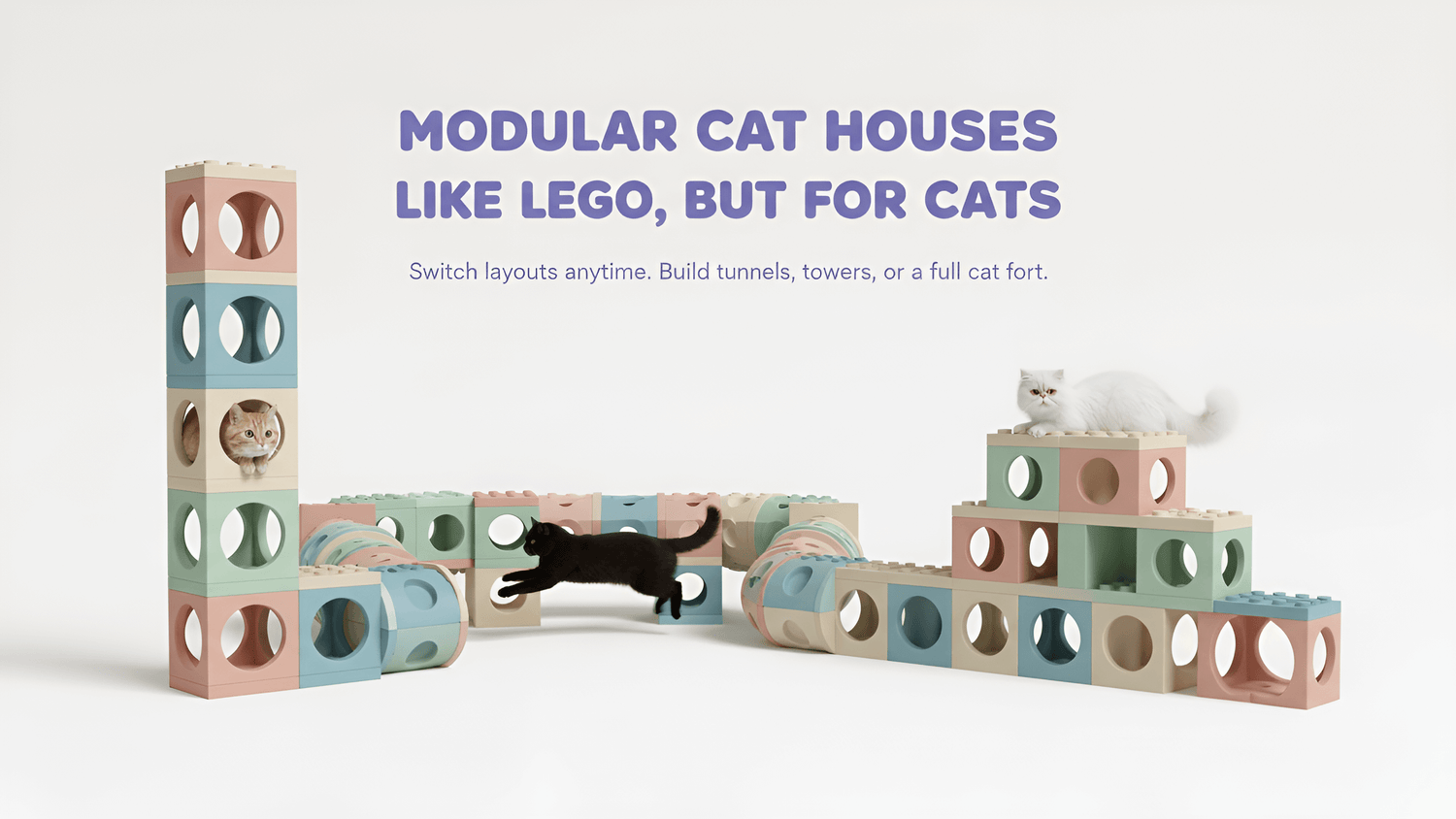
If you’re a hands-on pet parent with more than one mischievous feline at home — or you just want to give your cat a little extra adventure — a modular cat house (modular cat tree / DIY cat fort) can transform a dull corner into a whisker-twitching playground. These “Lego-style” structures let you unleash your creativity, build vertical climbing towers, cozy hiding caves, or sprawling multi-level castles — perfect for cats’ instinctual love of climbing, exploring, and staking out territory.
In this article, we’ll dive into the best DIY cat house ideas and show you exactly how to build and arrange a modular cat tree or cat fort to stimulate your cat’s desire to explore. We’ll cover design principles, space planning, materials, multi-cat tips, safety & stability, and inspiration for creative builds. By the end, you’ll have a clear roadmap to build a cat playground that’s fun, functional, and irresistible to your furry friends.
Let’s roll up our sleeves, grab some tools (or modular kits), and build something both you and your cats will love!
Why Modular Cat Houses Are Perfect for Curious Cats
House cats may no longer climb trees outdoors, but their instincts — to climb, hide, observe from high perches, and explore vertical territory — remain strong. A modular cat house recreates that vertical, multi-dimensional playground indoors. Unlike rigid, factory-made cat trees, modular systems let you adapt the configuration — turn a simple cube into a multi-tiered fortress, a series of tunnels, or an open climbing frame.
This flexibility means you can tailor the structure to your cats’ personalities: if one cat loves to hide, you add enclosed boxes; if another loves to climb, you build vertical towers and high perches. For multi-cat households, modular houses reduce conflict by offering multiple levels, hideouts, and escape routes. In other words: a modular cat tree isn’t just furniture — it becomes a customizable playground tuned to your pets’ instincts and needs.
Indeed, modular cat trees are often compared to “Lego for cats”: you assemble, stack, rearrange, expand — and change the layout as your cats grow or their behavior evolves.
Planning Your Cat Playground: What to Consider Before You Build
Before diving into hammer and wood, take a moment to plan your space, cats, and safety requirements.
Space & layout: Look at the area you plan to use. If you have a small apartment, vertical space is your friend — aim high, not wide. If ceilings are low, stackable cube-style modules or compact hideouts might be better. For larger rooms or multi-cat households, you might build sprawling multi-level forts combining perches, tunnels, and cozy boxes.
Number & personalities of cats: One cat might contentedly rest atop a single perch, but two or three cats need multiple perches, hideouts, and pathways to avoid territorial disputes. Cats with different preferences (climber, sleeper, explorer) benefit from a diversified module set: climbing posts, boxes, tunnels, etc.
Stability & safety: A tall or complex structure must be stable. Use a wide, sturdy base, anchor it against a wall if needed, and ensure connections (shelves, posts, tunnels) are secure. Choose materials carefully — plywood, solid wood, or sturdy crates — and avoid unstable or wobbly builds. Also consider scratch surfaces (sisal rope or carpet) and multiple access points (ramps, tunnels) so cats don’t get stuck.
By thinking through space + cat behavior + safety upfront, your DIY cat house will be much more enjoyable and long-lasting.
Core DIY Cat House Ideas & Modular Designs
Depending on your budget, tools, and the number of cats, there are different approaches to building a modular cat house.
Stackable Wooden Crates / Cubes
One of the most accessible DIY ideas is to stack wooden crates or cube-shaped boxes. You can rearrange them anytime — vertically to form towers, horizontally to create hideouts, or combine them with bridges and ramps. The modular cube design is especially friendly for multi-cat homes because each kitty can claim its own “room.” Many DIY-cat-house guides recommend wooden crate stacking for its flexibility and ease.
Plywood & Posts Multi-Level Cat Tower
For those with basic carpentry skills, building a multi-level tower from plywood, posts, and platforms offers strong stability and freedom in design. You can add shelves, cubbyholes, hiding boxes, scratching posts (wrapped in sisal rope), and perches. This type of structure can be made quite tall (depending on ceiling height) and customized to suit your cats’ climbing and resting preferences. Several DIY plans online show this method working well.
PVC Pipe + Sisal Rope Climbing Structures
For a lighter weight, more affordable build — especially in apartments or multi-level flats — using PVC pipes or lightweight posts wrapped with sisal rope (for scratching) plus plywood or fabric shelves can do the trick. Adding hammocks, ramps, and perches gives the cats vertical and horizontal variety. This is a good budget-friendly, customizable cat playground solution.
Cardboard / Lightweight Modular “Cat Fort” (for Kittens or Small Cats)
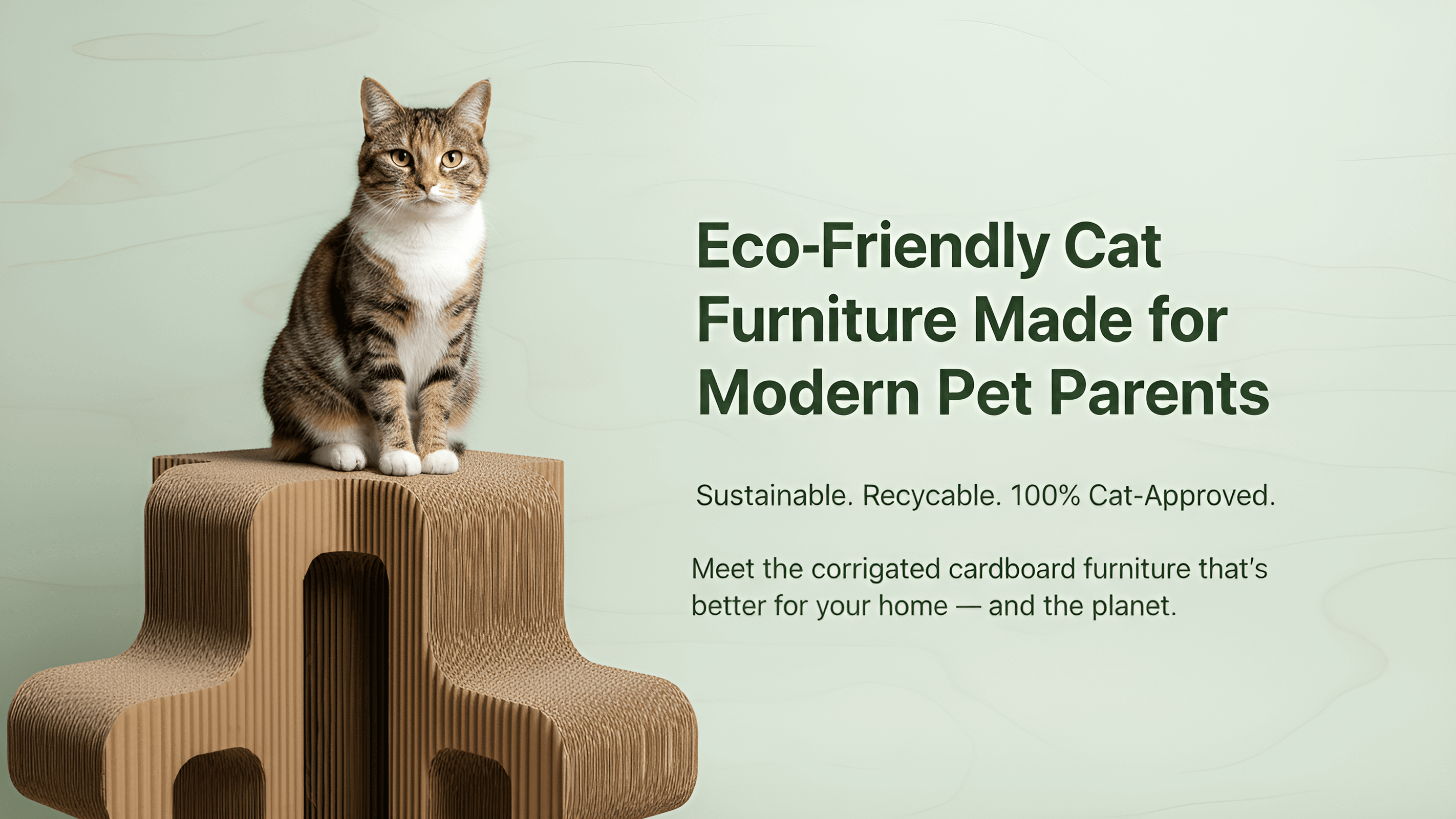
If you have kittens or small cats (or want something easy to assemble and rearrange), cardboard boxes or modular lightweight cubes can form a temporary fort or playhouse. While not as durable as wood or PVC, cardboard forts offer flexibility: easy to rebuild, expand, or reconfigure. Some DIYers turn this into a “cat castle” that kittens love to hide in, explore, and scratch.

Step-by-Step: Build a Modular Cat Fort (DIY Tutorial)
Here’s a general workflow if you want to build a modular cat house yourself.
Materials & Tools
● Plywood sheets or wooden crates / cubes / posts / PVC pipes
● Screws, metal brackets or joiners / connectors
● Sisal rope or carpet or fabric for scratching/climbing surfaces
● Staple gun or staples, adhesive or wood glue (if using plywood)
● Drill or screwdriver, saw (if cutting wood), sandpaper (smooth edges)
● Optional: soft bedding, cushions, toys, ramps / bridges / tunnels
You don’t need to spend a fortune — many successful DIY cat towers are built with basic plywood and posts. If you prefer not to source the materials yourself, you can also explore PalNests’ modular cat houses, which are designed for everyday DIY flexibility without requiring any special tools.
Building the Base & Support Posts
Start with a sturdy, wide base — this ensures stability, especially as you stack modules vertically. If you build a tall tower, consider anchoring it to a wall or using a heavy baseboard. Use ¾” plywood or solid wood posts joined with metal brackets for strength.
Constructing Platforms, Hideouts & Tunnels
Once the base is firm, add platforms at various heights — perches, shelves — where cats can rest or observe. Add enclosed boxes or “cubbyholes” for napping or hiding. Use plywood or wooden crates to create hideouts. If you like tunnels or bridges, connect modules with planks or fabric tunnels for more complexity.
Adding Scratching / Climbing Surfaces & Finishing Touches
Cover parts of the posts or platforms with sisal rope, carpet, or fabric to give good scratching surfaces. Add soft bedding or cushions inside hideouts for comfort. Hang toys, add ramps or bridges to make exploration more fun. For multi-cat households, ensure multiple perches, hideouts, and entry/exit points to avoid territorial disputes.
Multi-Cat Tips: Tunnels, Bridges & Multiple Entrances
If you have 2+ cats, incorporate multiple levels, tunnels, bridges, and separate hideouts to give each cat its own space and reduce stress. Modular design shines here — you can rearrange or expand over time based on how your cats behave and interact.

Where and How to Place Modular Cat Houses in Your Home
Placement is just as important as design. A well-placed cat house maximizes engagement and comfort.
● Near a window or sunny spot —cats love looking outside, bird-watching, sunbathing. A high perch near a window becomes an instant favorite.
● Avoid blocking traffic flow — don’t put the tower in a walkway; place it in corners, beside furniture, or where cats already hang out.
● Use wall support for tall builds — for tall multi-level towers, anchoring to a wall increases safety and stability.
● Provide multiple towers or houses for multi-cat homes — especially in larger households, multiple smaller forts spread around can reduce territorial stress rather than one big structure.
Modular Cat Houses vs Store-Bought Cat Trees — Pros & Cons
Advantages of DIY / modular builds:
● Customization & creative freedom — you decide the shape, size, modules, layout. Great if you want something unique.
● Expandability & reconfigurability — as cats grow or household changes, you can add/remove modules, rearrange layout.
● Cost-effective (potentially) — basic materials often cost less than premium pre-made cat trees, especially if you recycle crates or repurpose materials.
● Fun for owners — building or assembling can be a rewarding DIY project, especially if you enjoy hands-on work and crafting.
Challenges or trade-offs:
● Time and effort required — building takes planning, tools, and labor. Not as quick as ordering a ready-made cat tree.
● Safety & stability concerns — if poorly built, towers may wobble or topple; need proper base, secure joints, safe materials.
● Maintenance or wear-out — carpets, sisal, or scratch surfaces wear over time and need replacement/cleanup.
● Aesthetic vs function — DIY builds may look rough or mismatched compared to sleek store furniture; requires design sense if you care about décor.
Real-Life Examples & Inspiration
● The “Infinity DIY Cat Tree”, often dubbed the “LEGO of cat trees,” offers modular stacking, customizable platforms, and mix-and-match configurations. It’s a great demonstration of how a modular design can fit different spaces and cat personalities.
● Some DIYers build multi-level wooden cat towers using plywood, posts, and sisal-wrapped posts — with platforms, cubbyholes, ramps, and scratch posts — providing a sturdy, long-term solution.
● For budget-conscious or temporary setups — cardboard forts or cube-houses can offer hiding spots and climbing fun for kittens or small cats, and are easy to rebuild or rearrange.
These real-life examples show the versatility of modular builds — from budget DIY to more permanent multi-cat castles.
Quick Takeaways
● Modular cat houses give cats vertical space, hiding spots, climbing opportunities, and mental enrichment — far superior to flat toys or simple towers.
● By tailoring the structure (cubes, tunnels, perches), you meet different cats’ personalities — climbers, hiders, loungers.
● DIY approach — whether wooden crates, plywood towers, PVC + sisal or even cardboard — offers flexibility and creativity; you build what fits your space and cats.
● For multi-cat households, multiple levels, tunnels, separate hideouts, and multiple entrances help reduce conflict and give each cat its own territory.
● Safety, stability, and proper materials are key — a poorly built structure can be unsafe. Plan base width, anchoring, weight support, and stable joints.
FAQs
Q1: Is building a modular cat house safe for multiple cats?
Yes — as long as you build a wide and strong base, secure all joints (screws/brackets), and, for tall structures, anchor against a wall or heavy baseboard. Incorporating multiple levels, platforms, and separate perches/tunnels gives each cat its own space, reducing fighting and stress.
Q2: What materials are recommended for a DIY cat fort?
Common effective materials include plywood or solid wood for platforms and posts, crate/cube-style wooden boxes, sisal rope or carpet for scratching surfaces, and metal brackets/screws for stability. For budget or temporary builds, used wooden crates or PVC + fabric can work too.
Q3: How do I make sure a modular cat tree doesn’t tip over?
Use a wide, heavy base, distribute weight lower (heavier modules at bottom), anchor the structure to a wall if tall, and avoid too many top-heavy extensions. Also check joints regularly and ensure platforms/posts are securely fastened.
Q4: My apartment is small — can modular cat houses still work?
Absolutely. Choose stackable cube modules, vertical towers, or compact crate-systems. Modular designs are flexible — you can build narrow, tall structures that take minimal floor space — perfect for apartments.
Q5: What’s the benefit of building a modular cat house over buying a ready-made cat tree?
DIY / modular builds give you customization, adaptability, and creative control. You can build for your space and cats’ personalities, expand or rearrange over time, and potentially save cost. Plus, building it yourself can be a fun project and give your cats a unique playground tailored to them.
Conclusion & Call to Action
Building a modular cat house — whether a DIY wood tower, a stackable crate system, or a creative cat fort — isn’t just about giving your cat a spot to nap or scratch. It’s about creating an environment that stimulates their instincts to climb, hide, explore, and claim territory. For multi-cat households or curious cats, this kind of vertical playground can reduce boredom, minimize territorial stress, and provide hours of enrichment.
If you enjoy hands-on projects and want to give your cats a constantly evolving playground, start planning today: measure your space, sketch a layout, gather materials, and build something uniquely yours. Your cats will thank you — and you’ll have the satisfaction of saying, “I built this for them.”


Leave a comment
This site is protected by hCaptcha and the hCaptcha Privacy Policy and Terms of Service apply.