
Quick answer
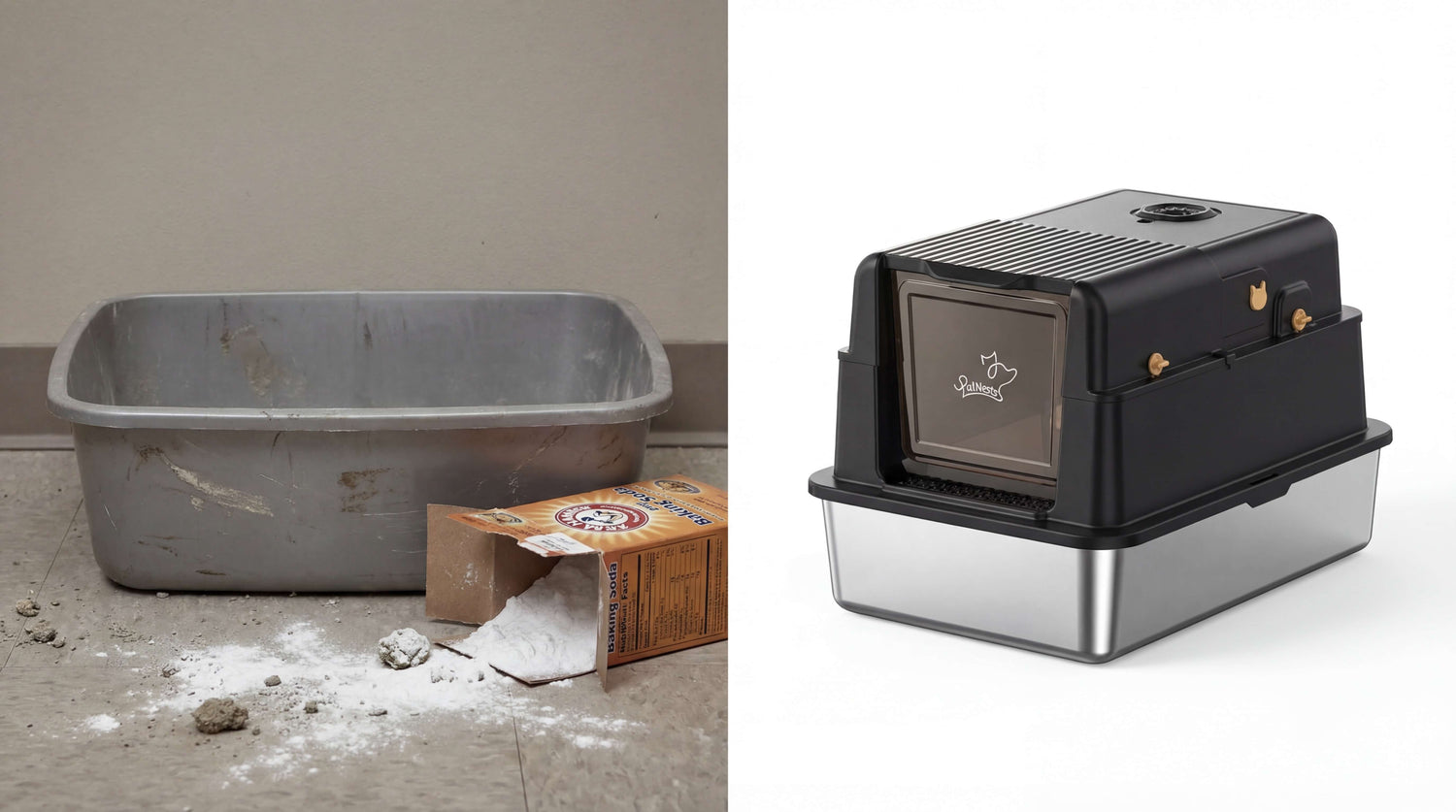
Yes, you can add a small amount of baking soda to cat litter if your cat tolerates it and the litter brand does not warn against it. It can help with mild odor. What it cannot do is fix a litter box that is too small, too worn, poorly cleaned, or already holding onto stale smell.
That is why baking soda works best as a light support tool, not as the foundation of odor control.
What baking soda can help with
Baking soda can slightly reduce surface-level odor in a clean, well-managed litter box. If you scoop consistently, change litter on time, and the box itself is still in good condition, a small amount may give you a little extra margin between cleanings.
For some households, that is enough. Especially with one calm cat and a straightforward setup, mild odor support may be all you need.
What baking soda cannot fix
Baking soda cannot solve these underlying problems:
urine hitting outside the main litter area
a box that is too small for the cat's body
deep wear and scratches that keep holding smell
old litter sitting too long between cleanings
a stressed cat who avoids the box and eliminates elsewhere
This is the point many odor-control articles skip. Deodorizers are not the same thing as odor prevention. If the problem lives in box size, box condition, or cleaning routine, you need to fix that first.
Some cats dislike added deodorizers
Another reason to be cautious is cat preference. Cat Friendly Homes' litter box guidance reminds owners that some cats are sensitive to added scents, dust, or changes in litter feel. Even unscented additives can change how the litter behaves.
So if you want to test baking soda, keep the change small and watch your cat closely. A "smart" odor trick is not smart if it makes the cat dislike the box.
Why box size and surface still matter more
If your cat is large, messy, or backs up toward the edge when urinating, the biggest odor improvement may come from changing the box rather than adding another powder. A larger, easier-to-clean high-sided stainless steel litter box can reduce the amount of trapped mess the odor has to come from in the first place.
That is also why the broader stainless steel vs plastic litter box comparison matters for odor shoppers. Material affects how easy it is to fully refresh the box after use. Once a plastic surface is worn and persistently stale, baking soda often starts acting like a bandage over a bigger problem.
A better odor-control stack
If smell is the real issue, build your odor strategy in this order:
- use a box that fits the cat properly
- scoop often and fully
- keep litter depth consistent
- wash the box on a schedule
- only then add mild odor support if needed
The ASPCA litter box problems guide is also useful because odor issues and litter box avoidance often connect. A box that smells wrong to you may feel wrong to the cat too.
When it is time to upgrade instead of deodorize
It may be time to stop adding odor products and replace the box if:
- odor returns quickly after cleaning
- the box is visibly scratched or stained
- your cat is large and the box is undersized
- the litter area feels harder to manage every month
In that situation, your next step should probably be browsing the full cat litter box collection or going straight to the PalNests stainless steel litter box product page.
Final takeaway
Baking soda can help with mild odor, but it is not a substitute for a good litter box system. If the box is too small, too worn, or too hard to clean, the better fix is structural rather than chemical.
Use baking soda as a light support tool. Use the right box, cleaning routine, and material as the real odor strategy.

Leave a comment
This site is protected by hCaptcha and the hCaptcha Privacy Policy and Terms of Service apply.