
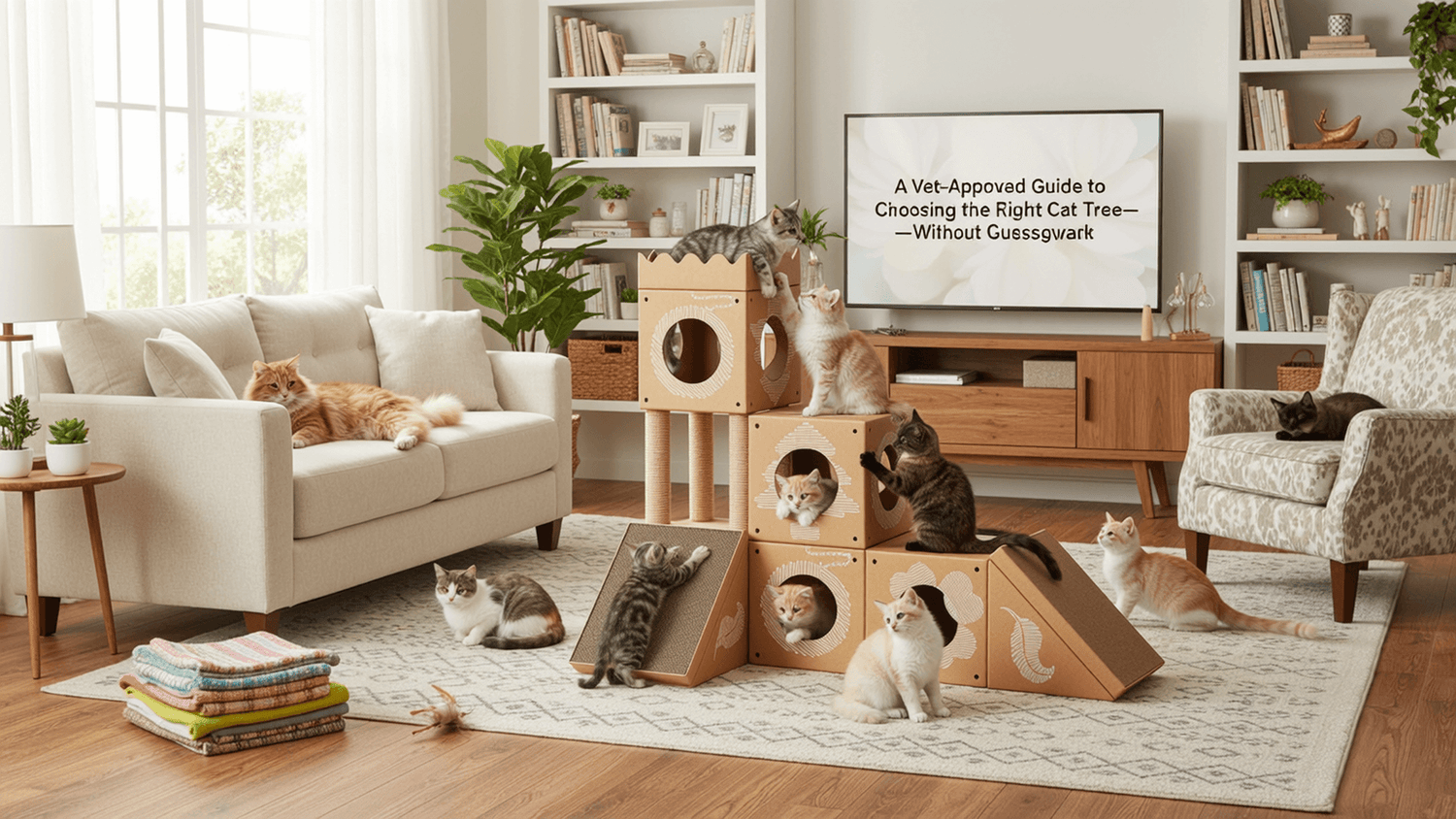
For first-time cat owners, buying a cat tree can feel surprisingly overwhelming. With countless designs, materials, and price points on the market, many people ask the same question: what makes a good cat tree, and how do you avoid buying the wrong one?
From a veterinary and feline behavior perspective, a cat tree is not just furniture—it’s an essential enrichment tool. A well-designed cat tree supports natural feline instincts, promotes physical health, reduces stress-related behaviors, and helps indoor cats feel secure in their territory.
Unfortunately, many traditional cat trees prioritize appearance or low cost over stability, safety, and long-term durability. This often leads to wobbling structures, rapid wear, or designs that cats simply ignore.
In this vet-approved checklist, we’ll break down exactly what to look for in a quality cat tree, step by step. You’ll learn how to evaluate materials, height, stability, safety, and cat-specific needs—so you can make a confident, informed decision and invest in something your cat will actually use.
Why Every Cat Needs a Good Cat Tree
Natural Feline Instincts: Climbing, Scratching & Perching
Cats are vertical animals by nature. In the wild, climbing allows them to observe territory, escape threats, and rest in elevated, secure locations. A good cat tree recreates this vertical environment indoors.
Scratching is equally essential. It helps cats:
● Maintain claw health
● Stretch muscles and joints
● Mark territory through scent glands
Without a proper scratching structure, cats often redirect this behavior to sofas or carpets.
Behavioral & Mental Health Benefits
Veterinary behaviorists widely agree that environmental enrichment reduces anxiety, boredom, and destructive behaviors. A thoughtfully designed cat tree provides:
● Predictable personal space
● Stress relief through play and rest
● Improved confidence, especially in timid cats
Physical Health & Daily Movement
Jumping, climbing, and stretching on a cat tree encourage regular movement, which supports:
● Muscle tone
● Joint flexibility
● Healthy weight management
For indoor cats, this daily activity is especially critical.
Key Factors in Choosing a Quality Cat Tree
This is where most buyers make mistakes. Use the checklist below to evaluate any cat tree objectively.
Stability: The Non-Negotiable Foundation
A good cat tree must never wobble.
What to Look For
● Wide, heavy base
● Even weight distribution
● Anti-tip or low center of gravity design
If a cat feels instability once, they may avoid the structure permanently.
Durable, Cat-Safe Materials
Material choice directly impacts longevity and safety.
Common Materials Compared
● Sisal rope: Excellent for scratching, highly durable
● Carpet: Soft but traps hair and odors over time
● Corrugated cardboard: When high-density and layered correctly, it offers strong resistance and natural claw engagement
A sturdy cat house made with high-density corrugated cardboard can outperform low-quality wood or thin particleboard when engineered properly.
Height & Multi-Level Design
From a vet perspective, a good cat tree should allow:
● At least one elevated perch
● Multiple platforms for movement, not just vertical height
Cats prefer graduated levels over a single tall climb.
Accessibility for Age & Mobility
For Kittens & Active Cats
● Taller structures
● Wider jumping gaps
For Senior or Less Mobile Cats
● Lower entry points
● Step-like platforms
● Stable surfaces with good grip
A good cat tree adapts to your cat’s life stage.
Comfort & Rest Zones
Look for:
● Flat platforms for stretching
● Enclosed hideaways for security
● Perches large enough for full body support
Cats should be able to fully relax, not just perch.
Safety & Non-Toxic Construction
Vet-approved designs avoid:
● Sharp edges
● Toxic glues or finishes
● Loose components
Always prioritize non-toxic materials and smooth finishes.
Matching the Cat Tree to Your Cat’s Personality
Not all cats use cat trees the same way.
Single vs Multi-Cat Homes
Multi-cat households benefit from:
● Multiple vertical routes
● Separate resting zones
● Reduced competition
Active Explorers vs Calm Observers
● Explorers need height and movement paths
● Loungers prefer wide platforms and hideouts
Understanding your cat’s behavior prevents wasted purchases.
Placement & Home Integration Tips
A good cat tree fails if placed incorrectly.
Best Locations
● Near a window (visual stimulation)
● In shared living areas (social comfort)
● Against a wall or corner (added stability)
Blending with Home Decor
Modern cat owners increasingly choose minimalist cat trees that complement interiors rather than clash with them—proof that function and aesthetics can coexist.
Maintenance & Longevity
A quality cat tree should age gracefully.
Maintenance Checklist
● Easy-to-clean surfaces
● Replaceable scratching components
● Modular designs for part replacement
This is where many modern designs outperform traditional carpeted towers.
Vet-Approved Checklist: What Makes a Good Cat Tree
✔ Stable, wide base
✔ Durable scratching materials
✔ Multi-level platforms
✔ Age-appropriate accessibility
✔ Safe, non-toxic construction
✔ Comfortable resting zones
✔ Fits both your cat and your home
If you are looking for a system that grows with your cat, consider a Modular Cardboard Cat Tree & Scratcher. This design allows you to replace individual scratching parts or expand the structure without buying a whole new tower.
Where PalNests Fits In (A Practical Option)
If you prefer not to overanalyze materials and measurements, modern modular options like PalNests cat trees already meet most vet-recommended criteria. Their high-density cardboard structure, modular design, and neutral color options (green and beige) make them a practical solution for both cats and design-conscious homes—without the bulk of traditional cat towers.
Conclusion: Choosing with Confidence
So, what makes a good cat tree? From a veterinary standpoint, it’s one that supports natural behavior, remains stable under daily use, and adapts to your cat’s physical and emotional needs over time.
For first-time cat owners, the goal isn’t to find the tallest or most expensive option—it’s to choose thoughtfully. Use this checklist, observe your cat’s habits, and prioritize quality over trends.
A well-chosen cat tree isn’t just a purchase. It’s a long-term investment in your cat’s health, comfort, and happiness.
FAQs
1. What makes a good cat tree for beginners?
Stability, safe materials, and simple multi-level design are most important for first-time buyers.
2. Are cardboard cat trees really durable?
High-density corrugated cardboard can be surprisingly long-lasting and cat-preferred when properly engineered.
3. How tall should a cat tree be?
Most cats benefit from at least one elevated perch above eye level, but multiple levels matter more than height alone.
4. Do vets recommend cat trees?
Yes. Cat trees are widely recognized as essential enrichment tools for indoor cats.
5. Where should I place a cat tree?
Near windows or social areas, with stable floor contact and minimal wobble.


Leave a comment
This site is protected by hCaptcha and the hCaptcha Privacy Policy and Terms of Service apply.