
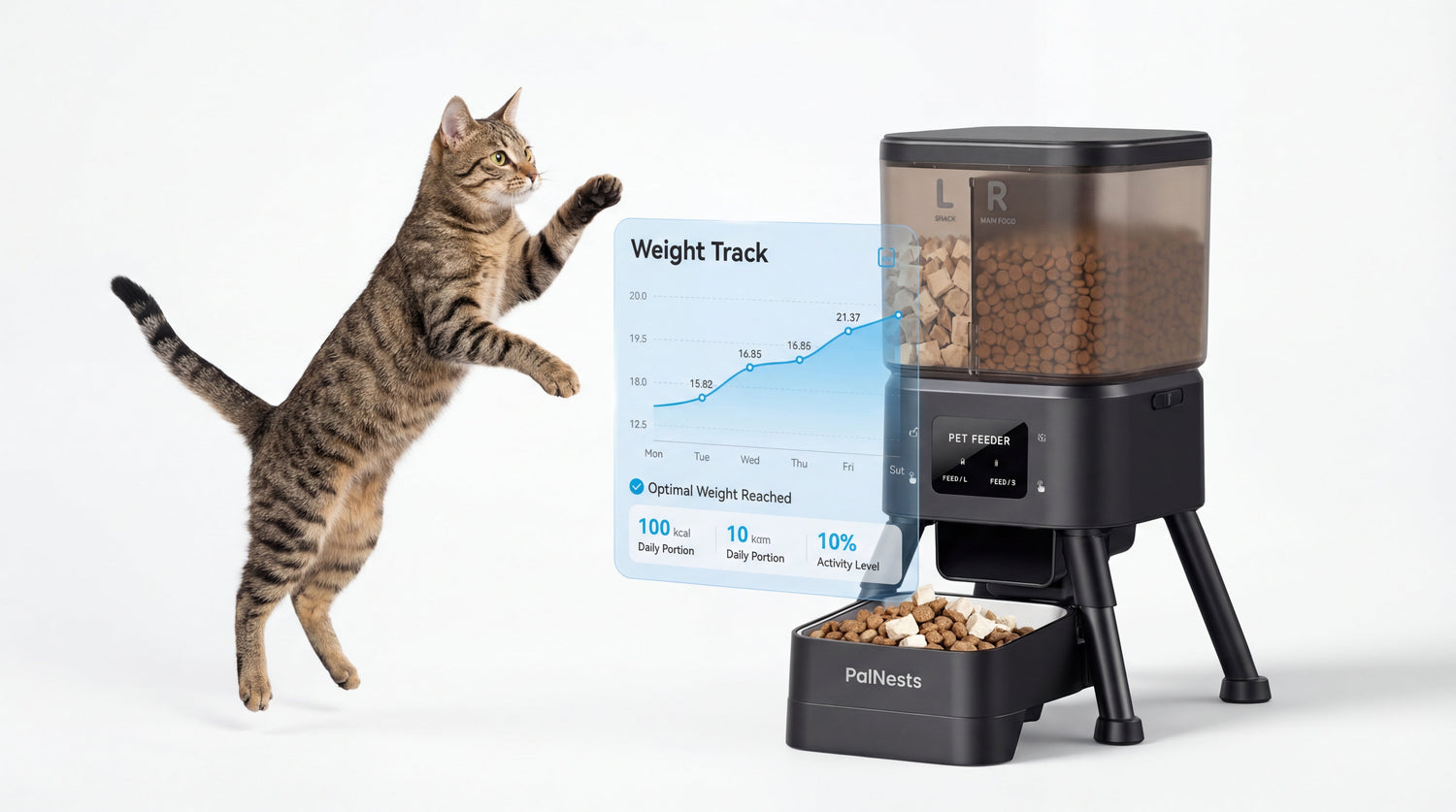
We’ve all seen the "Chonky Cat" memes, but for a pet parent, feline obesity is no laughing matter. According to the Association for Pet Obesity Prevention, over 60% of cats in the U.S. are overweight. Those extra pounds aren't just a cosmetic issue; they lead to life-threatening conditions like Type 2 diabetes, hepatic lipidosis, and debilitating osteoarthritis.
The challenge? Most cats are "food motivated" (to put it mildly). When you try to start a cat weight loss diet plan, you are often met with midnight meows, scratched doors, and soul-crushing guilt.
The secret to success isn't just what you feed, but how you feed. In this guide, we’ll explore why a dual-chamber automatic feeder for fat cats is the ultimate tool for achieving a healthy weight without the drama of a "hunger strike."
The Feline Obesity Crisis: Why Manual Feeding Usually Fails
The traditional way of feeding—scooping some kibble into a bowl whenever it looks empty—is the primary driver of weight gain.
Why Manual Feeding is Inaccurate
Humans are notoriously bad at estimating volume. A "half-cup" of kibble can vary by 20% depending on how tightly you pack the scoop. For a 10lb cat, an extra 20 calories a day can result in a pound of weight gain over a year.
The Guilt Factor
When your cat begs, you give in. It’s human nature. An automatic feeder for fat cats removes the human element. The cat learns that the machine is the food provider, not you, which significantly reduces begging behavior directed at the owner.
Designing a Science-Backed Cat Weight Loss Diet Plan
Before you change the food, you need a strategy.
1. Calculate the Calorie Target: Most indoor cats need about 20 calories per pound of "target" body weight. Consult your vet to find your cat's ideal weight.
2. Small, Frequent Meals: Instead of two large meals, program your feeder for 5-6 tiny meals. This keeps the cat’s blood sugar stable and prevents the "starving" sensation that leads to aggression.
3. Hydration is Key: Ensure your feeding station is paired with a clean water source, as cats often confuse thirst with hunger.
The Transition Secret: Why Dual Hoppers Win
The biggest hurdle in any cat weight loss diet plan is the "transition." Weight management food often tastes different—it’s higher in fiber and lower in fats. If you swap the food overnight, your cat might refuse to eat, which is dangerous for their liver.
The PalNests Dual-Chamber Advantage
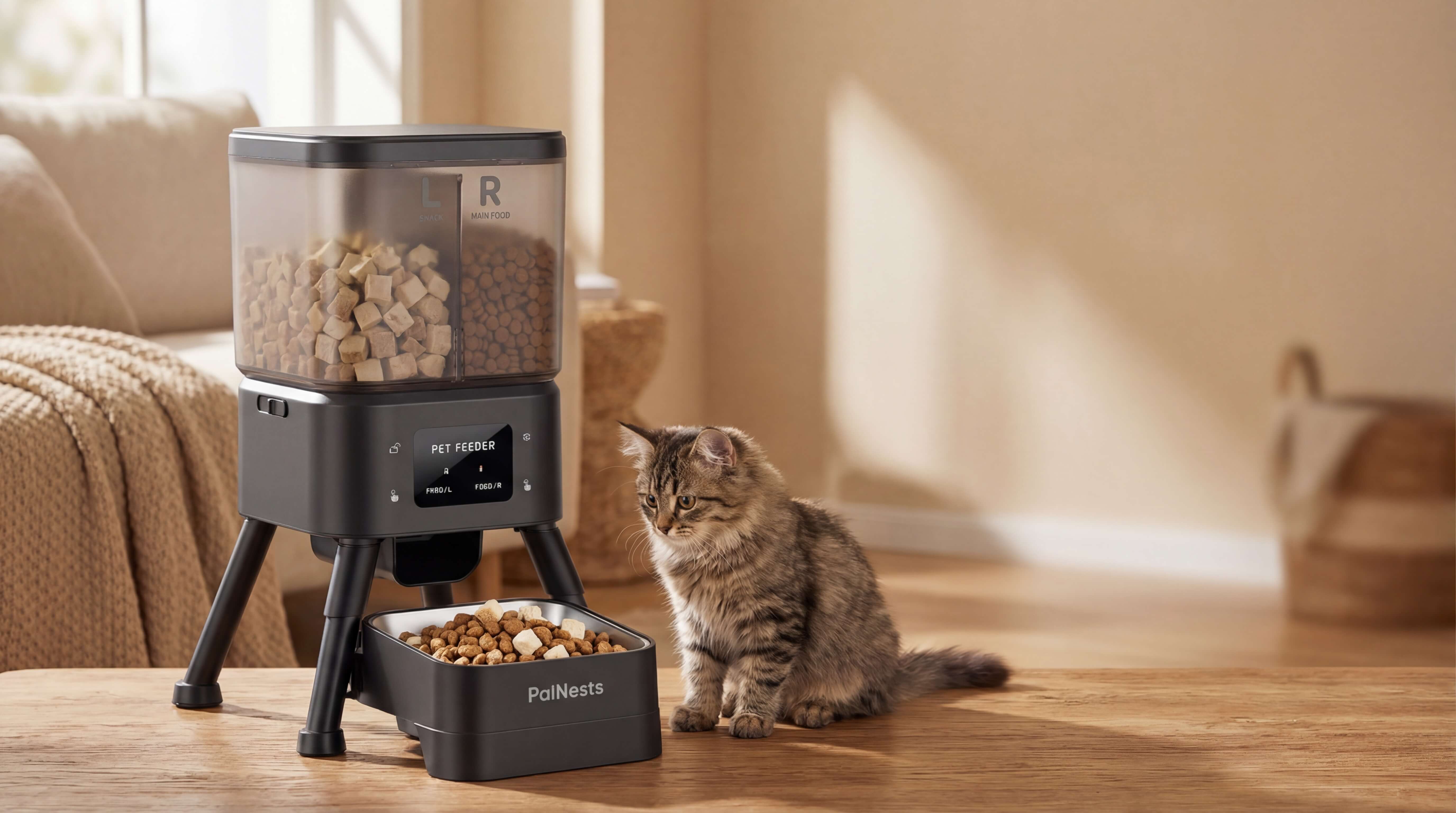
This is where the PalNests feeder becomes a medical-grade tool. With two separate hoppers, you can implement a "Stealth Transition":
● Chamber A: Your cat’s current, delicious, high-calorie food.
● Chamber B: The new, low-calorie weight management or prescription diet.
Instead of manually mixing bags of food (which leads to the cat picking out the "good bits"), the dual-chamber system dispenses both simultaneously into the bowl.
Step-by-Step Transition Guide Using PalNests
To ensure your cat doesn't catch on to your "diet plot," use this 4-week transition schedule via the PalNests app:
● Week 1 (The Handshake): Set the ratio to 90% Chamber A / 10% Chamber B. The scent of the old food masks the new.
● Week 2 (The Balance): Shift to 70% Chamber A / 30% Chamber B. Your cat’s digestive system begins to adjust to the higher fiber content.
● Week 3 (The Flip): Move to 40% Chamber A / 60% Chamber B. By now, the metabolic changes are starting to take effect.
● Week 4 (Success): 0% Chamber A / 100% Chamber B. Your cat is now fully transitioned to their weight loss kibble without a single day of protest.
Monitoring Progress with Smart Tech
A cat weight loss diet plan is not "set it and forget it." You must monitor and adjust.
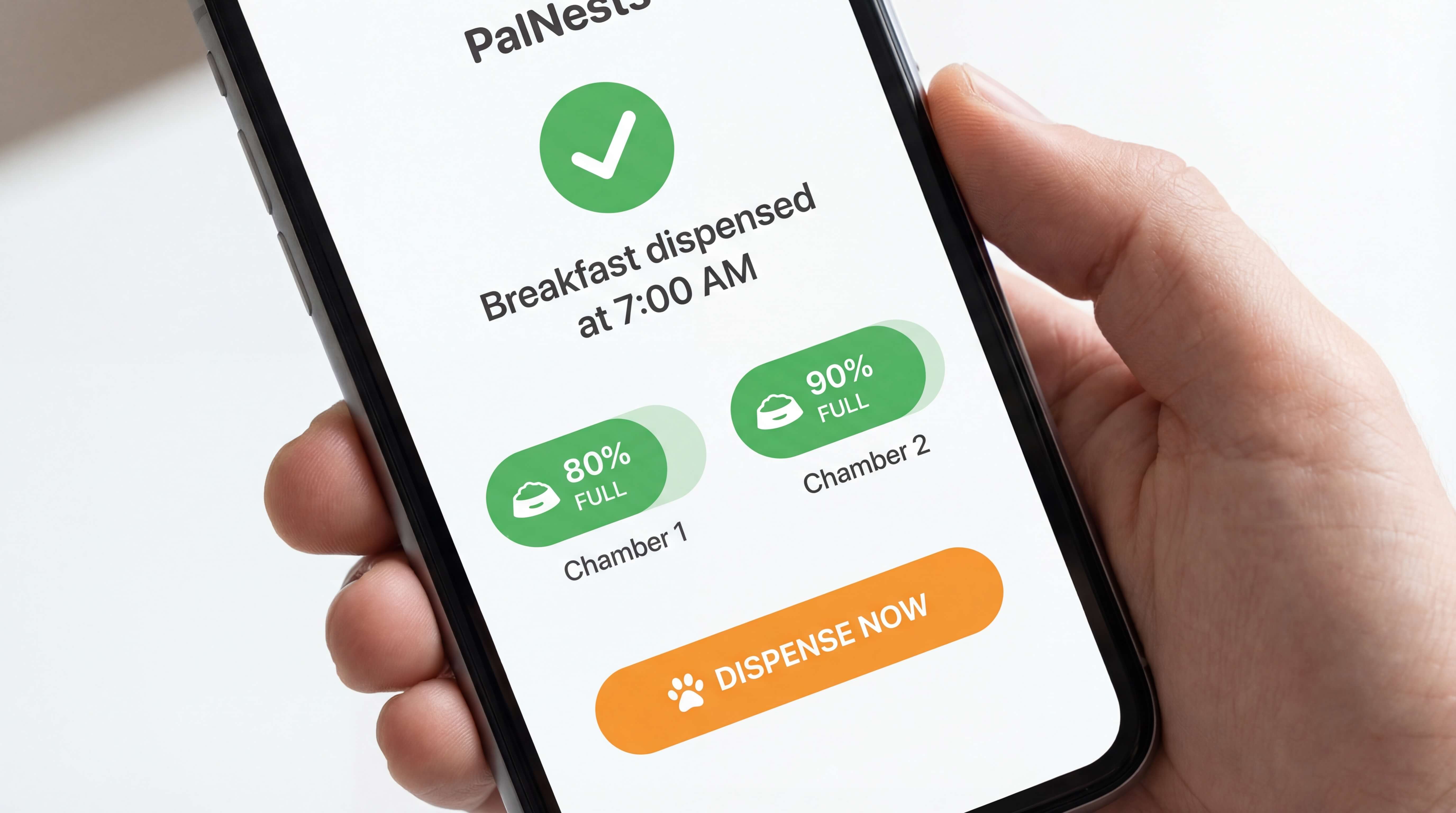
The PalNests app provides a feeding log that shows exactly when and how much was dispensed. If you notice your cat isn't finishing their diet meals, you can use the app to split the portions into even smaller, more frequent increments.
Pro-Tip: Weigh your cat once a week using a luggage scale or by holding them on a human scale. A safe weight loss rate is 0.5% to 2% of total body weight per week.
Summary: Quick Takeaways
● Feline obesity is a health emergency that requires a precise caloric plan.
● Manual feeding is too inaccurate for effective weight loss.
● Automatic feeders for fat cats break the "owner = food" association, reducing begging.
● Dual-chamber technology allows for a "Stealth Transition" from regular to diet food.
● Frequency matters: Feeding 5-6 small meals per day prevents hunger-induced stress.
Conclusion: A Leaner, Longer Life
Helping your cat lose weight is one of the kindest things you can do for them. It adds years to their life and life to their years. While it requires patience, the right tools make the process almost effortless.
By combining a vet-approved cat weight loss diet plan with the precision of a PalNests Dual Chamber Feeder, you remove the guesswork and the guilt. You aren't just "putting them on a diet"—you are using technology to provide the exact nutrition they need to thrive.
Take the first step today. Calculate their calories, fill the hoppers, and watch your cat regain their kitten-like energy.
FAQ: Weight Loss & Automatic Feeding
Q: Will my cat be hungry all the time on a diet?
A: If you feed small amounts frequently (5-8 times a day) using an automatic feeder, their stomach stays partially full, which prevents the "starvation" signals that lead to crying and begging.
Q: Can I use the second chamber for treats while they are on a diet?
A: Yes! You can put low-calorie dental treats in Chamber B and program the feeder to give 1-2 pieces as a reward, ensuring even their "snacks" are portion-controlled.
Q: My cat is a "bolter" and eats too fast. Will this help?
A: Absolutely. By dispensing food in tiny increments (e.g., 5g every 2 hours), you force them to eat slowly, which improves digestion and satiety.
Q: What if I have a fat cat and a thin cat?
A: This is a challenge! We recommend using a multi-cat feeding station with a visual barrier or microchip-access to ensure the "diet cat" doesn't steal the "thin cat’s" food.
Q: How do I know if the diet is working?
A: Look for the "waistline." When looking at your cat from above, you should see a subtle tuck behind the ribs. If they still look like a "loaf," it’s time to slightly reduce the portion size in the app.

Leave a comment
This site is protected by hCaptcha and the hCaptcha Privacy Policy and Terms of Service apply.