
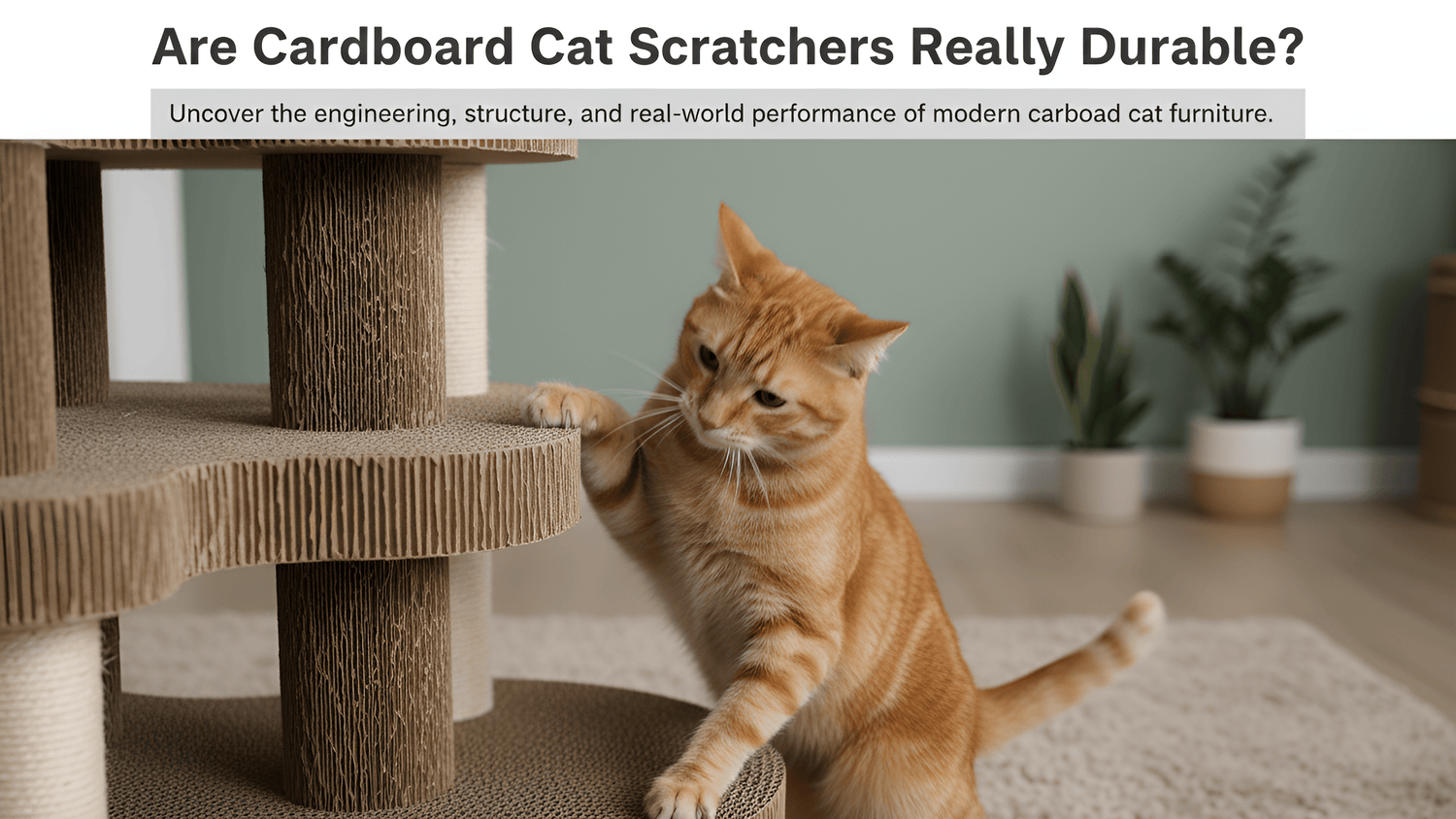
If you’ve ever wondered “are cardboard cat scratchers durable?” — you’re not alone. Many cautious cat owners hesitate to buy cardboard-based scratchers and houses because they imagine flimsy boxes that fall apart in a day. The truth is more nuanced. The durability of cardboard cat scratchers depends on material quality, corrugation density, construction technique, and whether the design includes reinforcement. When made right, high-density corrugated cardboard can resist claws, provide satisfying resistance, and last for months under regular use — especially when designed as part of a sturdy multifunctional cat tree.
This article explores what makes cardboard cat scratchers — and full cardboard cat houses — strong, how to evaluate their durability, and what real buyers and experts say about longevity. We’ll also highlight one product that combines durability with stylish home integration: thePalNests Modular Cardboard Cat Tree & Tower (available in Green or Beige/Natural). If you’re worried about flimsy cardboard that can’t withstand daily use, this guide will walk you through how quality corrugated cardboard scratchers are engineered to stand the test of time.
Understanding Cardboard Durability for Scratchers
The Science Behind Corrugated Cardboard Strength
Corrugated cardboard isn’t just recycled paper stacked together. Its durability comes from structure: a fluted core sandwiched between flat liners. The flutes act like tiny pillars that resist compression and allow the surface to withstand scratching forces. When cardboard is high-density and multi-layered, it provides a surprisingly strong surface that holds up well to vigorous use.
Industry measurements typically use grams per square meter (GSM) to describe density — higher numbers usually indicate thicker, more durable cardboard. Quality scratchers often aim for densities of 600 GSM or more, which translates to months of scratching ability even with daily use.
Another strength factor is flute type. Cardboard with tighter, smaller flutes tends to withstand claw engagement better than loose, large flutes because it spreads pressure across more contact points. Some premium manufacturers also use double-wall construction — essentially two corrugated layers — to increase rigidity and weight-bearing capacity.
Factors That Determine How Long Cardboard Scratchers Last
Material Quality Matters Most
Not all cardboard is created equal. Lightweight, thin cardboard (often found in cheap or disposable pads) will shred quickly under regular use — sometimes in a matter of weeks. On the other hand, premium corrugated cardboard with high density and tight fluting tends to hold up better and shred more slowly, extending functional lifespan.
For example, some scratchers are designed with multi-layer lamination and precise bonding, meaning the cardboard sheets don’t separate easily even as surfaces wear. This improves life expectancy significantly compared to generic single-layer pads.
Design and Reinforcement Are Key
Durability isn’t just about the cardboard itself. A scratcher or cat house designed to distribute cat weight and claw pressure across a stable structure will outlast poorly designed alternatives. Without reinforcement — such as a rigid base, internal truss, or modular connection points — cardboard scratchers can bend or collapse under lateral pressure.
Cats often apply significant downward and lateral force when they scratch or climb; if the cardboard isn’t supported by a sturdy shape or reinforced edges, wear accelerates quickly. Well-engineered cardboard scratchers address this by using backing boards, reinforced corners, or integrated modular design that prevents early collapse and keeps the surface usable longer.
How Long Can Cardboard Scratchers Last?
How long a cardboard scratcher lasts varies with use, cat behavior, and design quality. A generic scratch pad may last 1–3 months under frequent use, especially if it’s lightweight or thin.
However, premium, high-density corrugated cardboard scratchers — particularly those with reversible surfaces — can endure 3–6 months or more. Some products extend this further with double-sided use or replaceable inserts, effectively doubling usable life.
Customer experiences, especially with larger or more active cats, vary: some owners report inexpensive scratchers shredded quickly, while others praise higher-quality corrugated designs that continue to function for many months with daily use.
Common Misconceptions About Cardboard Durability
“Cardboard Wears Out Too Fast” — Not Always True
Yes, cardboard will eventually wear down — but that’s expected. The goal isn’t eternal life; it’s a good balance of durability, affordability, and cat satisfaction. Many cardboard scratchers and houses are intentionally built with reversible surfaces and modular replaceable parts so you can extend lifespan affordably.
Cheaper models with loose flutes or weak glue will wear out quickly and shed debris, but that’s a quality issue, not a condemnation of the material. Choosing dense, well-constructed corrugated cardboard changes the story dramatically.
Cats and Texture Preferences Affect Wear
Some cats love tearing at cardboard vigorously, while others use it more moderately. Two cats using the same scratcher could produce very different results in terms of durability. This is less about material failure and more about user behavior — a normal consideration for any cat furniture, whether cardboard, sisal, or wood.
Cardboard Compared to Other Scratcher Materials
Cardboard vs Sisal
Sisal rope posts are often touted as more durable than cardboard; indeed, high-quality sisal scratchers can last one to two years or more under daily use.
But not all cats like sisal — some, especially kittens or light scratchers, prefer the feel of cardboard, even if it wears down sooner. The ideal setup in a home often includes both textures for variety.
Cardboard vs Carpet or Wood
Carpeted posts often shed fibers and trap dirt and are less eco-friendly. Wood is extremely durable but lacks the satisfying resistance many cats enjoy. Corrugated cardboard provides just the right balance of texture and resistance that keeps many cats engaged.
Why PalNests Modular Cardboard Cat Tree Is Built to Last
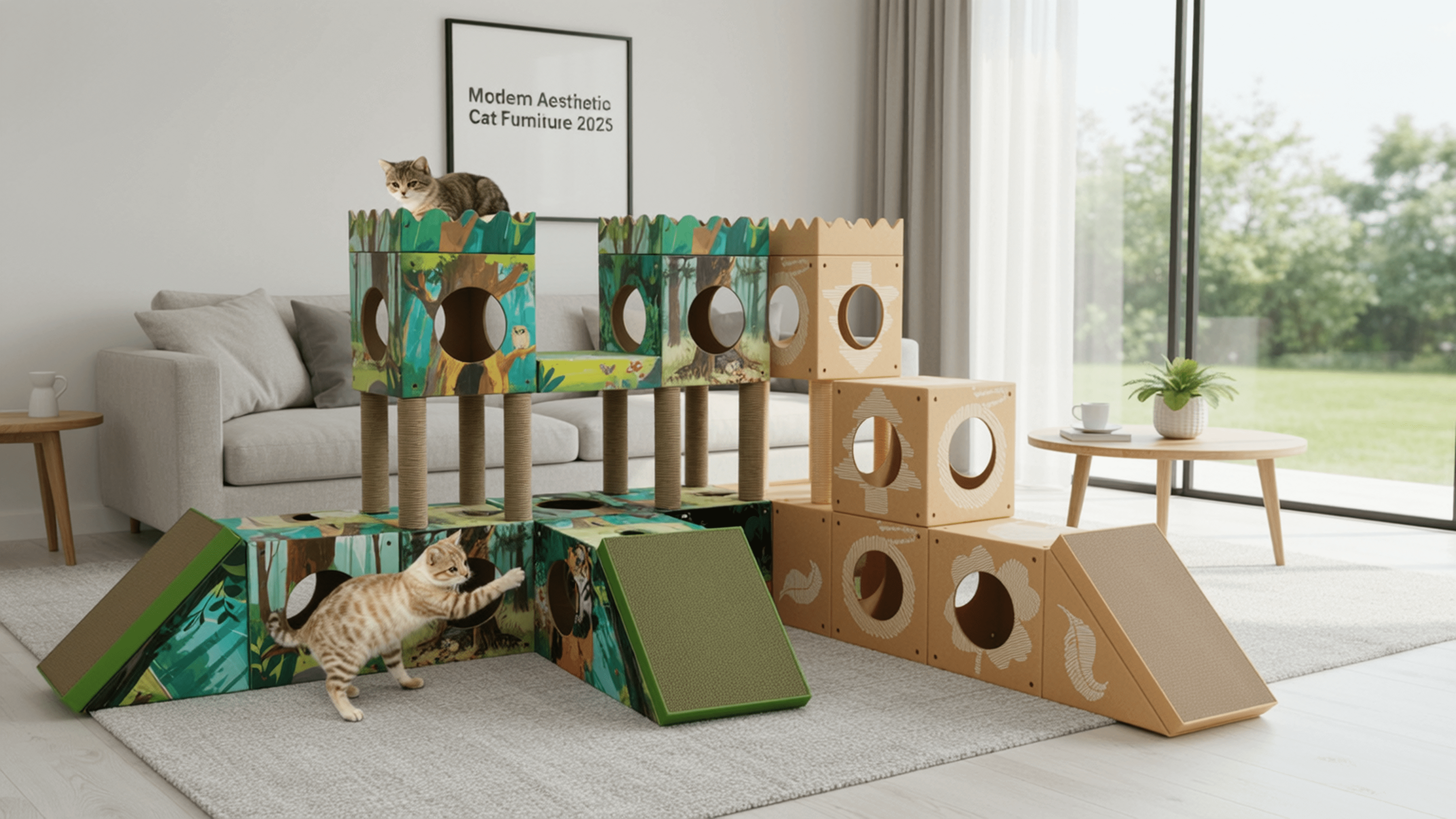
When evaluating whether cardboard scratchers are durable, design matters as much as material. The PalNests Modular Cardboard Cat Tree & Tower uses high-density corrugated cardboard and modular support structures that resist crushing and buckling under daily use.
This modular design has several advantages:
● Replaceable surfaces: Parts can be rotated or replaced, which extends life while reducing waste.
● Modular support: Structured geometry distributes weight and claw force evenly.
● Neutral aesthetics: Available in Green and Beige/Natural, it complements home décor
while still serving as a long-lasting scratching and climbing space.
These design choices address common durability concerns, proving that cardboard cat furniture can be strong when engineered properly — satisfying both cautious buyers and discerning cats.

Conclusion
Concerns about cardboard’s durability are understandable — after all, not all cardboard scratchers are created equal. Cheap models with thin fluting and weak adhesive can fall apart quickly, especially under the enthusiastic use of an active cat.
However, high-density corrugated cardboard — particularly when engineered into a well-supported, modular structure — can withstand months of daily scratching, resist crushing, and provide cats with satisfying resistance without sacrificing aesthetic appeal.
When evaluating are cardboard cat scratchers durable?, the key isn’t just the material itself, but how it’s designed and used. Proper density, well-bonded layers, reversible surfaces, and structural support can all extend life significantly. Plus, cardboard remains an eco-friendly, recyclable option that many cats instinctively love.
For cat lovers who prioritize both function and home design, products like the PalNests Modular Cardboard Cat Tree & Tower show that high-density cardboard furniture can be both sturdy and stylish. Available in curated Green and Beige/Natural finishes, it offers a durable scratching surface alongside climbing and lounging spaces — all while blending into modern interiors.
If you’re worried about durability but want a cat tree that’s functional, well-built, and design-forward, a modular high-density corrugated cardboard solution might be exactly what you’re looking for.
FAQ
Q1: Are cardboard cat scratchers durable enough for daily use?
Yes — high-density corrugated cardboard scratchers, especially with reversible surfaces, can endure months of active scratching.
Q2: How long should a durable cardboard cat scratcher last?
Quality cardboard scratchers with dense flutes and good construction typically last several months under daily use and can be extended with reversible or replaceable designs.
Q3: Is cardboard stronger than carpet or sisal?
Cardboard is generally less durable than sisal in long-term vertical posts but comparable or better than carpet and often more appealing to cats due to texture.
Q4: What makes a cardboard cat scratcher sturdy?
Sturdy cardboard scratchers use high-density fluting, quality adhesives, multi-layer construction, and reinforcement like modular support or backing boards.
Q5: Can a cardboard cat scratcher hold up for large cats?
With proper structural support and choice of high-density materials, cardboard scratch surfaces can remain stable, though very heavy cats may benefit from extra reinforcement.

Leave a comment
This site is protected by hCaptcha and the hCaptcha Privacy Policy and Terms of Service apply.